Cornbread Hemp has built its market position around a narrower sourcing story than most CBD brands tell: flower-only extraction, Kentucky-grown hemp, and full transparency on lab testing. In a category where differentiation often comes down to marketing copy rather than substance, that positioning carries real weight for retailers and consumers trying to sort credible operators from the noise.
The Flower-Only Argument, and Its Limits
The company's founders, Eric Zipperle and Jim Higdon, say limiting extraction to the hemp flower - rather than processing stalks and other plant material along with it - produces a more potent, more consistent product. That's a defensible operational claim; a 2021 study did find cannabinoid concentrations are highest in the flower. But here's the catch: there isn't a deep body of research confirming that flower-only sourcing translates into meaningfully better outcomes for consumers. It's a supply-chain decision with plausible chemistry behind it, not a clinically proven advantage. Brands making similar claims should be evaluated the same way - on documentation, not slogans.
Lab Testing and the COA as a Trust Mechanism
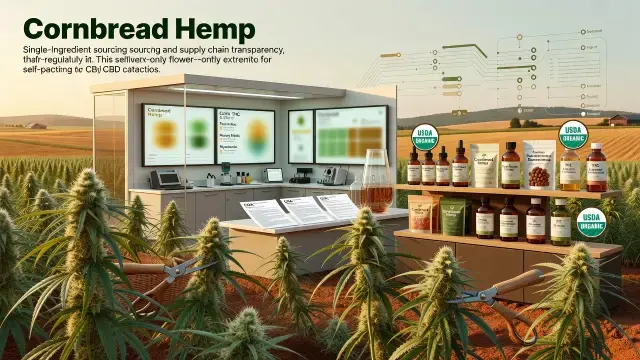
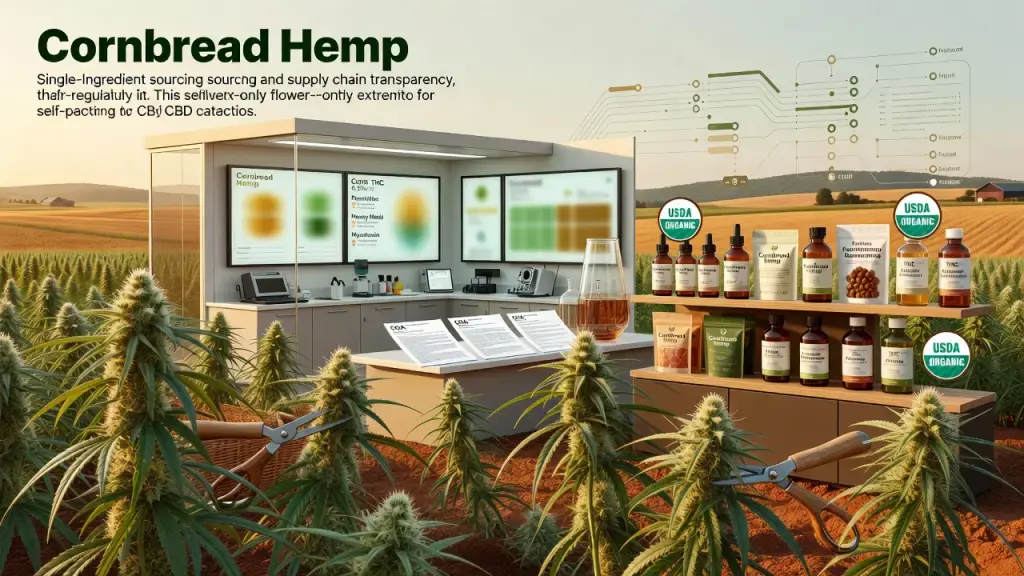
What's striking here is how much of Cornbread Hemp's credibility rests on something unglamorous: posting certificates of analysis for every batch. Third-party lab testing confirms products stay under the federal 0.3% THC threshold and screens for pesticides, heavy metals, and mycotoxins. For wholesale buyers and retailers stocking CBD alongside other wellness products, a publicly accessible COA isn't a nice-to-have anymore - it's close to table stakes. Operators who can't produce that documentation on request are increasingly a liability, both reputationally and in terms of consumer-protection exposure.
USDA Organic Certification and Ingredient Disclosure
Cornbread Hemp also publishes full ingredient lists and holds USDA organic certification on most of its catalog, sourcing hemp from Kentucky farmers under that standard. In practice, though, certification and transparency don't eliminate risk for consumers. The CDC has been direct about this: CBD use isn't without downside. Reported side effects include drowsiness, diarrhea, appetite changes, irritability, and in some cases liver injury, and CBD can interact with other medications. Retailers and brands have an obligation to communicate that clearly rather than let certification badges imply a clean bill of health.
Diversification Into Adjacent Wellness Categories
In 2026, the company expanded beyond hemp-derived CBD into functional mushroom gummies and THC-free adaptogen drinks - a move that mirrors a broader pattern among CBD brands hedging against regulatory uncertainty and flat category growth by building SKU portfolios in adjacent wellness spaces. For dispensary buyers and wholesale partners, that diversification signals a brand trying to build shelf resilience beyond a single regulatory category, which matters if federal hemp rules shift again.
- Products are legal at the federal level only if THC content stays below 0.3%; state laws vary and should be checked independently.
- Third-party COAs should be checked for pesticide, heavy metal, and mycotoxin screening, not just potency.
- Consumers on other medications should consult a healthcare professional before use, given documented interaction risks.
- Evidence for specific use cases, including sleep, remains limited according to recent research reviews.
None of this makes Cornbread Hemp's products a sure bet for any particular consumer outcome, and the company doesn't claim otherwise outright. What it does offer is a more documented, more traceable supply chain than much of the CBD market provides - which, in a largely self-regulated category, is itself the differentiator worth paying attention to.