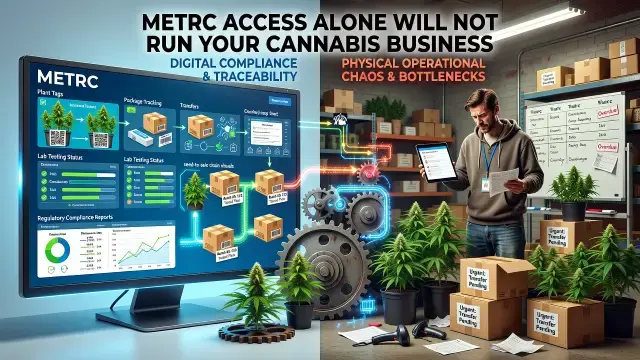
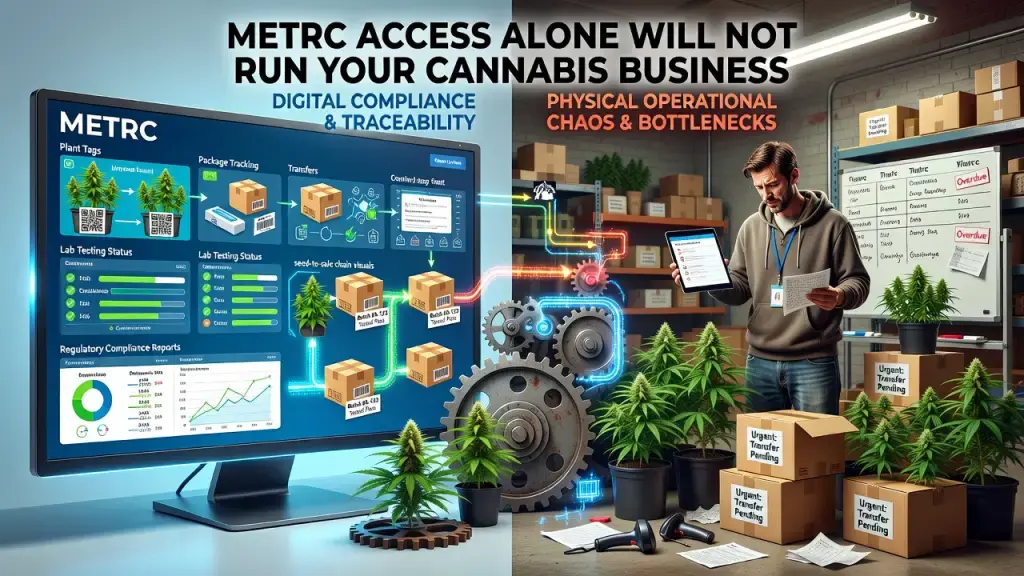
Getting approved in Metrc feels like crossing a finish line, but it marks the start of a different set of problems. State traceability systems track plants and packages from seed to sale, yet they were never built to run a business. That gap between regulatory compliance and operational reality is where a lot of cannabis operators quietly lose money.
What Metrc Does and Does Not Do
Metrc exists to satisfy state reporting requirements: tracking packages, tags, transfers, and lab testing status as products move through the supply chain. It is the record regulators look at when they want to know where a batch came from and where it went. What it does not do is manage sales, purchasing, taxes, returns, or anything resembling financial reporting. That's by design, not oversight - traceability software and business management software solve different problems. The trouble is that many new operators treat Metrc as if it covers both, then discover the hard way that it doesn't.
Where Spreadsheets Start to Break Down
Spreadsheets can paper over the gap for a while. A small operation with one location and a handful of SKUs can probably track live inventory, allocate product to sales reps, and manage wholesale orders using careful formulas and a disciplined team. The problem is that this approach does not scale cleanly, and the failure points are predictable:
- Active package status in Metrc does not reflect inventory that has already been promised to a buyer, so two sales reps can oversell the same batch before anyone catches it
- Allocating inventory to specific reps, brand partners, or locations requires manual tracking outside Metrc entirely
- Granting brand partners limited visibility into their own inventory means either exposing your full Metrc account or building a separate permissioned spreadsheet
- Non-cannabis inventory - jars, labels, packaging - falls outside Metrc's scope completely and depends on manual counts
- Excise tax calculations, discounts, and order-level pricing have no home in Metrc's transfer manifests
Each of these is manageable in isolation. Together, across a growing catalog and multiple sales channels, they add up to double data entry, reconciliation headaches, and the kind of human error that compliance logs do not forgive.
The Financial Reporting Blind Spot
Metrc offers a handful of reports - inventory point-in-time, lab results, package adjustments, transfer histories - but they're built for regulatory visibility, not business intelligence. Pulling a transfer report often means downloading a PDF or export file and searching it manually. There's no dynamic financial view, no automated tax summary, no profitability snapshot by SKU or wholesale account. Accounting software like QuickBooks fills part of that void, but even then, the data is only as useful as what gets entered, and pivot tables still require someone with the time and skill to build them. For operators managing 280E exposure and already-thin margins, that reporting gap is not a minor inconvenience - it's a real constraint on decision-making.
What This Means for Operators Scaling Up
None of this means spreadsheets are useless or that Metrc is poorly designed for its purpose. It means operators need to be honest about where the line sits between regulatory compliance and operational management. Seed-to-sale software built specifically for cannabis - the kind that syncs with Metrc rather than replacing it - exists to close exactly this gap: live inventory visibility, order and tax management, automated package creation, and financial reporting in one place. Whether that investment makes sense depends on order volume, headcount, and how much manual reconciliation a team can realistically absorb before mistakes start reaching customers, suppliers, or the next compliance audit.