Point-of-sale software is no longer judged on checkout speed alone. For dispensary operators evaluating Sweed, the real question has become what the platform connects to - and how well. A fresh look at Sweed's 2026 integration roster shows a deliberate push toward compliance infrastructure, identity verification, and consumer-facing discovery tools, three areas that increasingly determine whether a retail cannabis operation runs smoothly or spends its week fielding audit requests.
Age Verification Moves From Afterthought to Core Workflow
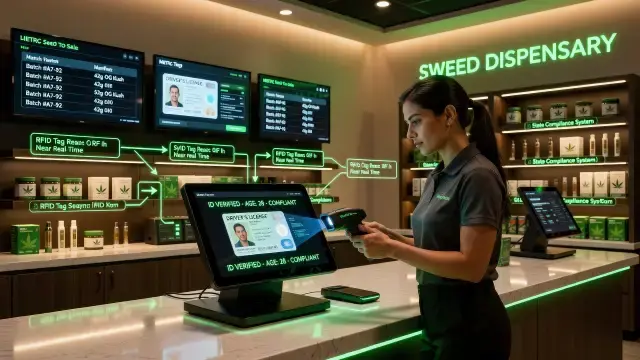
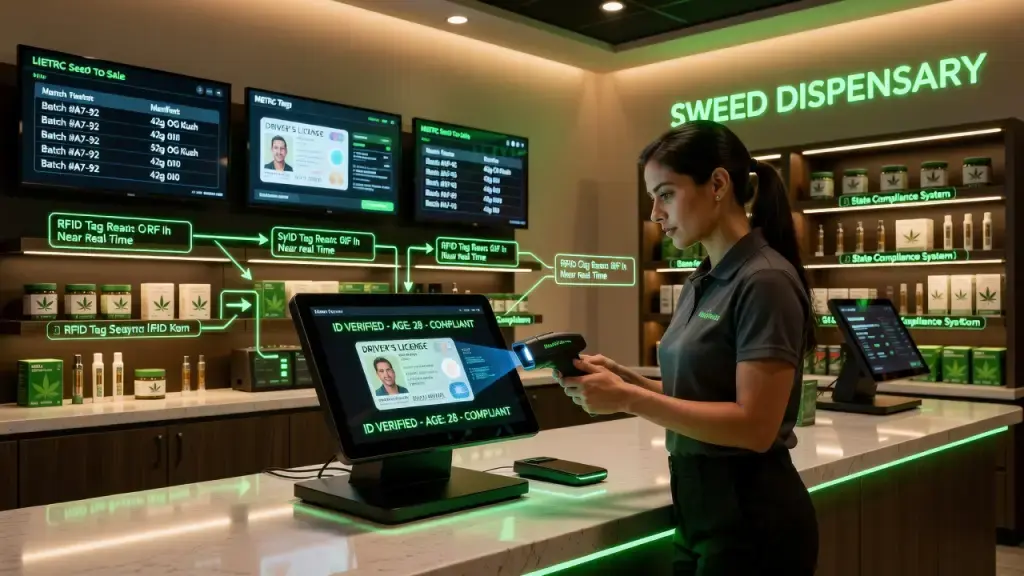
VeriScan's presence on the integration list says something about where retail compliance pressure actually sits. ID scanning used to be a manual step - a budtender squinting at a driver's license under fluorescent light. That approach is thin protection against sophisticated fake IDs, and regulators know it. VeriScan's pitch is straightforward: scan hardware that reads ultraviolet and infrared markers, checks holograms and watermarks, and flags documents a human eye would miss. For a dispensary, that's not a convenience feature. It's a liability shield. Age-gated retail carries real consequences for lapses, and a point-of-sale system that logs every scan creates an audit trail operators actually want to have on hand if a regulator comes asking.
The visitor-profile and banned-list functions matter too, particularly for multi-location operators. A customer flagged at one store should be flagged everywhere - that's basic risk management, not a luxury add-on.
Seed-to-Sale Tracking Still Anchors the Compliance Stack
Metrc's inclusion is no surprise; it's close to unavoidable in regulated markets. States lean on Metrc's RFID-tagged, cloud-based tracking to follow cannabis from cultivation through final sale, and dispensaries that run POS systems without a clean Metrc integration are asking for reconciliation headaches. Inventory shrinkage, mismatched batch counts, delayed manifest updates - these aren't abstract risks. They're the kind of discrepancies that trigger compliance reviews. A tight Sweed-Metrc connection means a sale at the register updates the state's tracking system without a staffer manually keying in product movements at the end of a shift. That matters more than it sounds like it should, because manual data entry is where most compliance errors actually originate.
Here's the catch, though: integration quality varies. A connection that technically syncs data once a day isn't the same as one that updates in near real time. Operators should ask vendors how often data actually passes between systems, not just whether a connection exists on paper.
Consumer Discovery Platforms Add a Different Layer
Weedmaps occupies different territory entirely - it's not a compliance tool, it's a market visibility one. Its menu and ordering integrations let dispensary inventory sync with a platform consumers already use to compare retailers, check product categories, and locate licensed stores near them. For operators, that connection reduces the friction of keeping multiple online menus current, which otherwise tends to fall through the cracks during a busy week. The risk, in practice, is menu drift: if the POS and the listing platform fall out of sync, customers see pricing or availability that no longer reflects what's on the shelf. That's a trust problem as much as a technical one.
What This Means for Operators Choosing a POS
Taken together, these three integrations outline a fairly honest picture of what dispensary technology now has to handle at once: verified age compliance, state-mandated tracking, and consumer-facing product discovery. None of these functions is optional for a licensed retailer, and none can be bolted on carelessly without creating new points of failure.
- Confirm how frequently Metrc data syncs - daily batch updates versus real-time reporting carry different compliance exposure.
- Ask whether ID scan logs are retained in a format regulators can request during an audit.
- Check whether menu updates on consumer platforms reflect live inventory or require manual refresh.
Software selection in cannabis retail isn't just about front-of-house efficiency anymore. It's a compliance decision dressed up as a technology purchase, and operators who treat it that way tend to have fewer uncomfortable conversations with regulators down the line.