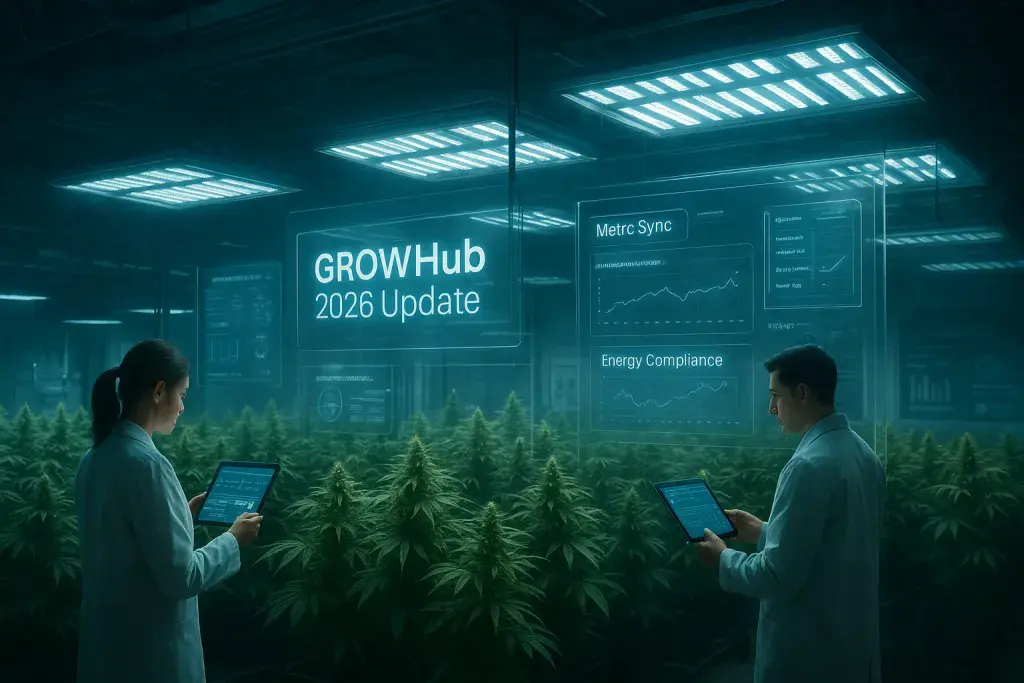
TSRgrow has rolled out a significant 2026 update to GROWHub, its cultivation management software, adding energy monitoring, expanded batch-record tools, Metrc integration and Building Management System connectivity to a platform that already controls the company's LED lighting and Remote Power infrastructure. The update matters because it addresses a problem most commercial cultivators know well: operational data scattered across disconnected systems, with no single record tying environmental conditions, energy use and compliance documentation to what actually happened during a crop cycle.
That fragmentation isn't just an annoyance. It's a liability. Cultivation teams running spreadsheets alongside separate lighting controllers and standalone track-and-trace logins are, in effect, managing three versions of the truth. When a regulator asks for a complete record of a batch - inputs, environmental settings, energy draw, timeline - reconstructing it from disparate tools eats staff hours and invites errors. This is the same operational headache that has pushed dispensary-side platforms toward consolidation; retailers looking at cannabis software for marijuana michigan have faced comparable pressure to unify point-of-sale, inventory and compliance reporting under one roof rather than stitching together patchwork systems. Cultivation is now catching up to that same logic. cannabis software for marijuana michigan
Why Compliance and Cultivation Data Are Converging
Metrc integration is the piece worth watching closely. Track-and-trace systems like Metrc were built to satisfy state seed-to-sale requirements, not to help growers optimize a crop. By linking Metrc workflows directly to batch records generated during cultivation, GROWHub narrows the gap between what regulators require and what operators actually use day to day. In practice, though, the real payoff isn't just fewer manual entries - it's a defensible audit trail. As federal rescheduling discussions continue and states tighten enforcement around recordkeeping, operators with clean, system-generated batch histories will be in a stronger position than those relying on manual logs assembled after the fact.
Energy Monitoring Enters the Compliance Conversation
Indoor cultivation is an energy-intensive business, and lighting typically represents one of the largest line items on a facility's utility bill. GROWHub's expanded energy monitoring, tied to TSRgrow's Remote Power infrastructure, lets operators view lighting consumption alongside cultivation and environmental data rather than as a separate utility report. That matters for margin-conscious operators facing rising power costs and, in some jurisdictions, sustainability reporting requirements tied to licensing. Pairing energy data with crop performance also gives operators a clearer basis for deciding where automation or schedule adjustments actually pay off, instead of guessing.
What This Signals for Multi-State Operators
For larger operators managing multiple facilities across different state compliance regimes, a platform that centralizes lighting recipes, environmental data, batch records and Metrc reporting reduces the burden of maintaining separate documentation practices site by site. It won't eliminate the compliance workload - state rules still vary, and audits still happen - but it does reduce the manual reconciliation that tends to produce inconsistent records across a portfolio. Fair enough to call this incremental rather than transformative; still, in an industry where recordkeeping gaps can trigger licensing scrutiny, incremental improvements to traceability carry real weight.