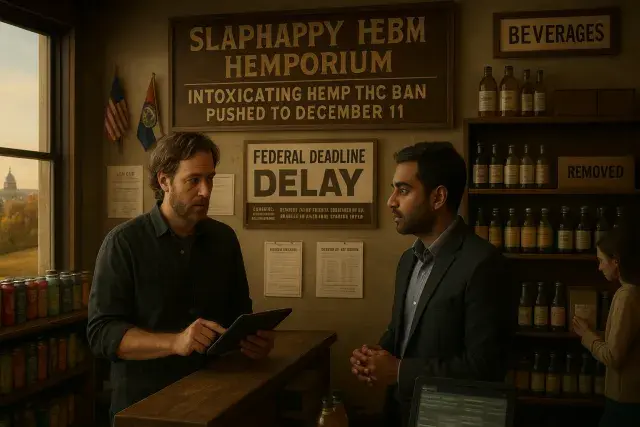
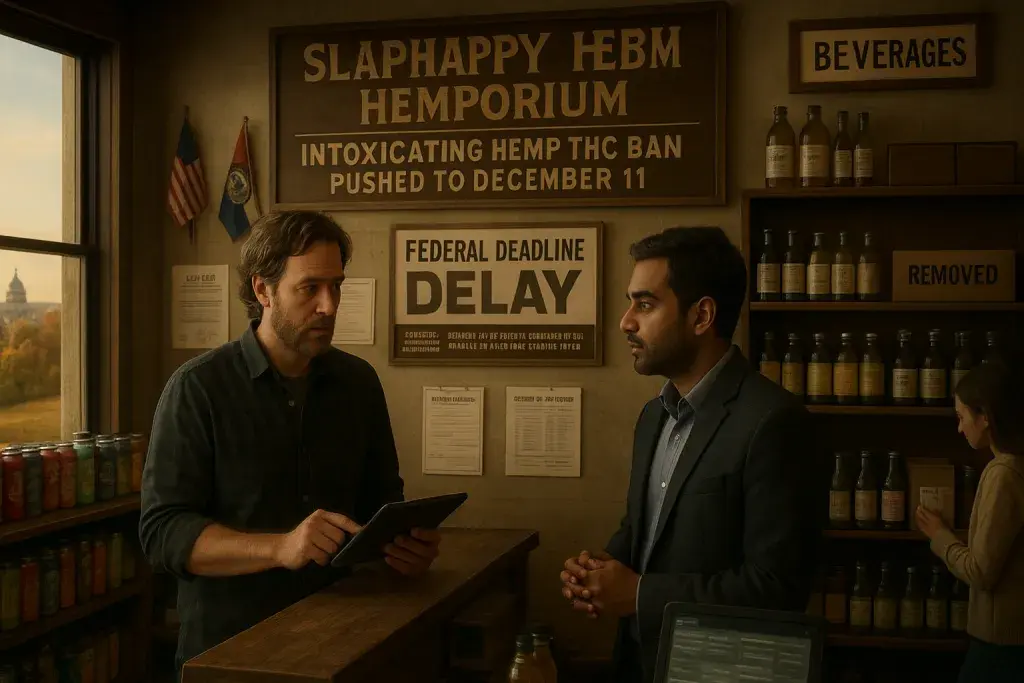
Missouri retailers stocking hemp-derived THC beverages may get to keep those coolers full past Nov. 12, the date the state's ban on intoxicating hemp products was set to take effect. The reprieve hinges on Washington, not Jefferson City. A short-term federal funding measure that would push the federal ban on intoxicating hemp THC products to Dec. 11 cleared the Senate overnight Saturday, Aug. 8, on a 61-31 vote, and now awaits House approval before it can reach the president's desk.
Here's the mechanism worth understanding: Missouri's own hemp law, signed by Gov. Mike Kehoe this spring, was written to mirror the federal timeline, but with a carve-out. If Congress delays its ban, everything except intoxicating beverages still goes off Missouri shelves on schedule. That narrow exception means gummies, tinctures, and other intoxicating hemp products face removal in November regardless of what happens in the House, while THC seltzers and similar drinks could survive into December. For operators running multi-category stores, that's a compliance headache dressed up as good news - inventory systems, wholesale menus, and point-of-sale configurations all need to distinguish beverage SKUs from everything else, fast. Retailers managing that kind of split-category inventory often lean on retail software built for regulated markets; the same logic that drives adoption of a dispensary pos system Ontario applies here, where product-category rules can flip overnight and recordkeeping has to keep pace. dispensary pos system Ontario
Jay Patel, president of the Missouri Hemp Trade Association, called the Senate vote a "good sign" for the industry but was careful not to oversell it. "Whatever happens on the federal side, it's not going to fully solve our problems in Missouri," he said. That's a fair read. A federal delay buys time; it doesn't settle the underlying legal fight. The association, along with a coalition of hemp businesses, has already filed suit in the U.S. District Court for the Western District, arguing the state's definitions of hemp and marijuana are unconstitutionally vague. That case proceeds on its own timeline, independent of whatever Congress does with appropriations.
What This Means for Retail Operations
For a business like Slaphappy Hemporium in Rosebud, the split outcome cuts two ways. Co-owner John Grady said his company's THC seltzers stand a strong chance of staying on shelves through December if the House and president sign off on the delay. But edibles and other product lines face removal no matter what happens federally. "We started off as a beverage producer," Grady said, "so for us, that is a good thing, but it also hurts the whole other part of our business." That's the operational reality for hemp retailers right now: planning inventory, wholesale orders, and staffing around a regulatory calendar that could shift again in a matter of weeks.
Compliant packaging, batch tracking, and lab testing documentation all matter more, not less, in this kind of transitional window. Retailers who can't clearly show which SKUs fall under which rule risk shelf pulls, chargebacks from distributors, or worse, enforcement action once state inspectors start checking against the Nov. 12 deadline. COAs and clear labeling won't resolve the legal ambiguity Patel's association is suing over, but they reduce exposure while that fight plays out.
A Narrow Window, Not a Resolution
The Gradys and other operators are using this delay to push for comprehensive federal hemp regulation before Dec. 11, when the stopgap funding measure would expire again. That's the real opportunity here - not permanent shelf space for beverages, but a chance to get durable rules in place before the next deadline arrives. In practice, though, federal action on hemp has moved slowly and unevenly, and there's no guarantee Congress uses this window any better than the last one. Missouri retailers should treat the beverage exception as a temporary operating condition, not a settled outcome, and keep their compliance logs current accordingly.