A Michigan Republican state representative wants to hit pause on the 24% cannabis wholesale tax that Gov. Gretchen Whitmer built into her road-funding package, arguing the levy is collecting a fraction of what was promised while pushing licensed operators toward the exits. Rep. Jay DeBoyer, R-Clay Township, said on Oct. 22 that he'll introduce legislation to suspend the tax for 12 months, giving lawmakers time to reassess whether it's doing more harm than good.
A Tax That Isn't Hitting Its Numbers
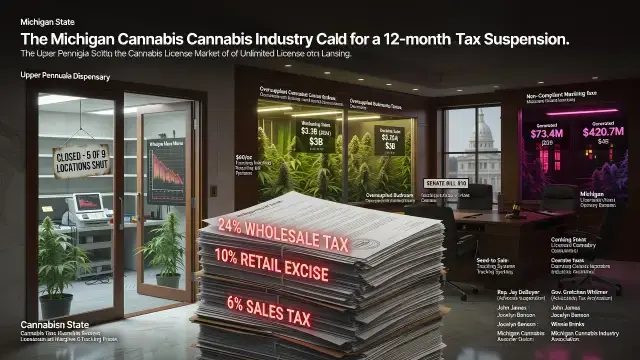
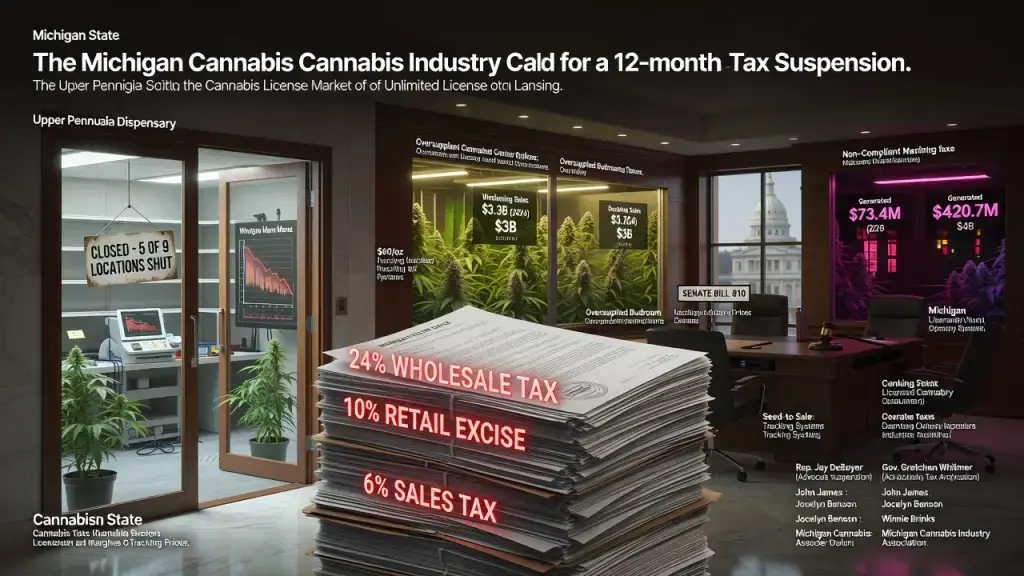
The wholesale tax took effect at the start of 2026 as part of Whitmer's Comprehensive Road Funding Tax Act, layered on top of the state's existing 10% retail excise tax and 6% sales tax. That's a stacked tax structure few other state cannabis programs attempt, and the early results suggest the math behind it didn't hold up. Initial projections pegged annual revenue at $420.7 million. Through the first six months of 2026, the tax generated just $73.4 million - roughly 35% of the pace needed to hit that target, according to the Michigan State Budget Office. DeBoyer points to a specific operational gap: there's no dedicated enforcement mechanism to collect the tax, which he says has left compliant operators absorbing costs while less scrupulous actors sidestep them entirely.
Oversupply Meets a New Cost Layer
Here's the catch for Michigan's unlimited-license market: it was already running on thin margins before this tax arrived. Average price per ounce sits near an all-time low of $60, a direct function of a licensing structure that never capped the number of cultivators or retailers entering the market. Add a 24% wholesale tax to that pricing environment, and the squeeze on budroom inventory, wholesale menus, and razor-thin retail margins becomes existential for smaller operators. One licensee already closed five of nine dispensaries in the Upper Peninsula in August, citing the tax directly as the reason smaller and rural markets became unsustainable to serve. Statewide retail sales are projected at $3 billion this year, down from $3.3 billion in 2024 - a plateau that suggests the market was already saturated before the new tax compounded the pressure.
The Black Market Argument
DeBoyer's central claim - that the tax is "driving the marijuana industry back into the black market" - deserves scrutiny rather than acceptance at face value, but it tracks with a pattern regulators in other adult-use states have documented: when compliant pricing climbs too far above illicit-market pricing, consumers migrate, and licensed operators lose volume they need to cover compliance costs like seed-to-sale tracking, lab testing, and compliant packaging. For dispensary operators, that's not an abstract policy debate. It shows up directly in POS terminal data and declining foot traffic.
Political Timing and an Uncertain Path Forward
DeBoyer's proposal isn't happening in a vacuum. A bipartisan group of eight state senators filed Senate Bill 810 in February to repeal the road funding act outright; it's sat in committee without a hearing since late February. Republican gubernatorial nominee John James, who selected DeBoyer as his running mate, has pledged to repeal or sharply reduce the tax if elected. Democratic nominee Jocelyn Benson has called it a "new and emerging issue" requiring more data before committing to a position - a notably different posture from her running mate, Senate Majority Leader Winnie Brinks, who voted for the tax last October. With Benson favored in current polling, operators and trade groups like the Michigan Cannabis Industry Association are watching closely to see whether a temporary suspension, a full repeal, or no change at all survives the next legislative session. For now, licensed retailers are left managing compliance costs and tax bills under a policy whose own revenue projections haven't materialized.