
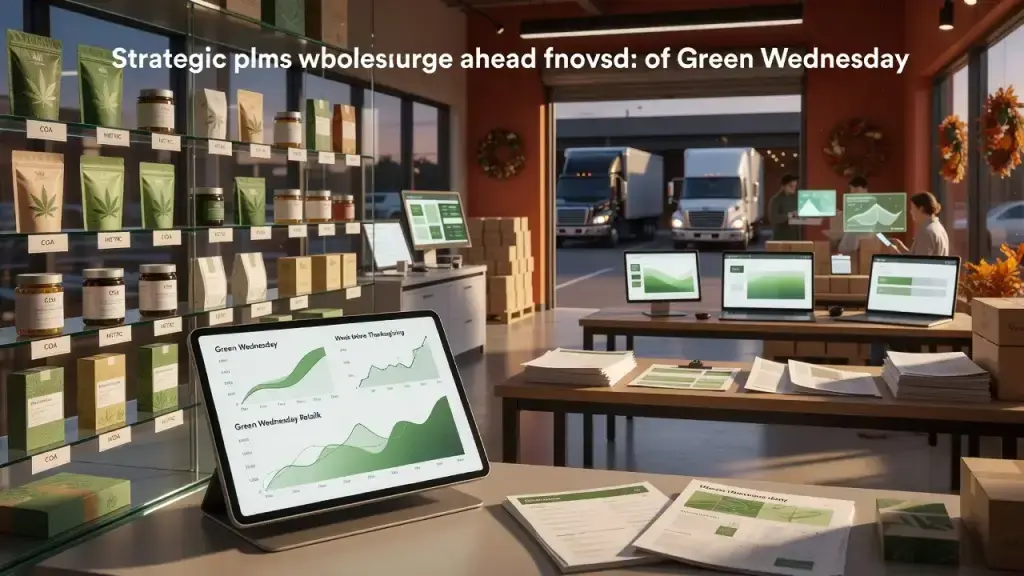
Green Wednesday has quietly become the cannabis industry's second-biggest sales day of the year, trailing only 4/20. But the retail spike on the day before Thanksgiving is really the tail end of a longer wholesale cycle - one that starts building in early November and crests the week before the holiday. For brands, distributors, and dispensary buyers, the real work happens weeks before any customer walks through the door.
LeafLink's new guide, built on three years of fourth-quarter wholesale marketplace data, gives operators something they rarely get: a data-backed picture of how ordering behavior actually shifts heading into the holiday. That's useful, because Green Wednesday doesn't behave like a normal retail spike. It's driven by wholesale replenishment cycles that start well before consumer demand shows up on dispensary POS terminals.
Why Wholesale Timing Matters More Than Retail-Day Hype
Here's the catch with Green Wednesday: by the time shoppers are filling baskets, the supply chain decisions that determine whether shelves are stocked - or thin - were made weeks earlier. Brands and distributors who wait until mid-November to push wholesale menus are already behind. Retail buyers are placing orders based on historical sell-through, budroom turnover, and anticipated foot traffic, not last-minute promotions.
That timing pressure cuts both ways. Distributors need production and packaging schedules that account for compliant packaging runs, batch testing turnaround, and COA availability well ahead of the order window. Dispensaries, meanwhile, need to reconcile incoming wholesale shipments with existing inventory counts in their seed-to-sale tracking systems - no small task when METRC manifests and point-of-sale reconciliation are already strained by holiday volume.
What the Data Suggests About Product Demand
According to LeafLink's findings, certain product categories see statistically higher order volumes specifically tied to the Green Wednesday period, distinct from general fourth-quarter patterns. That matters for SKU management. Brands that treat the holiday like a generic sales bump risk misallocating production capacity; those that study category-specific demand can structure wholesale pricing and promotional terms more precisely.
For dispensaries, the implication is straightforward: shelf planning needs to start with category-level forecasting, not just reordering last year's top sellers. Inventory shrinkage and stockouts during a high-traffic week carry a real cost - lost basket size, frustrated budtenders, and customers who simply go elsewhere.
A Practical Framework for Both Sides of the Transaction
- Brands and distributors: lock in production and lab testing schedules early enough to avoid bottlenecks; structure wholesale menus around historically high-performing categories rather than broad discounting.
- Dispensaries: audit budroom inventory against sell-through data from prior years; confirm staff scheduling accounts for compliance logging during peak hours, not just register throughput.
- Both sides: coordinate delivery manifests early, since last-minute wholesale orders strain distribution logistics already under seasonal load.
None of this guarantees a smooth week - holiday retail rarely is. But in practice, the operators who treat Green Wednesday as a supply chain problem, not just a sales event, tend to handle the surge with fewer compliance headaches and fewer empty shelves. That's the difference between reacting to demand and actually planning for it.