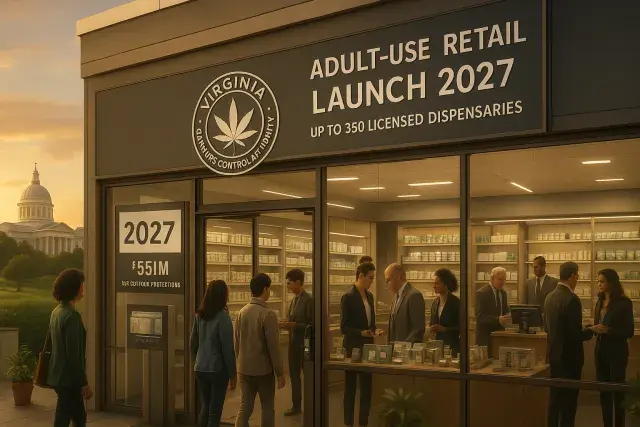
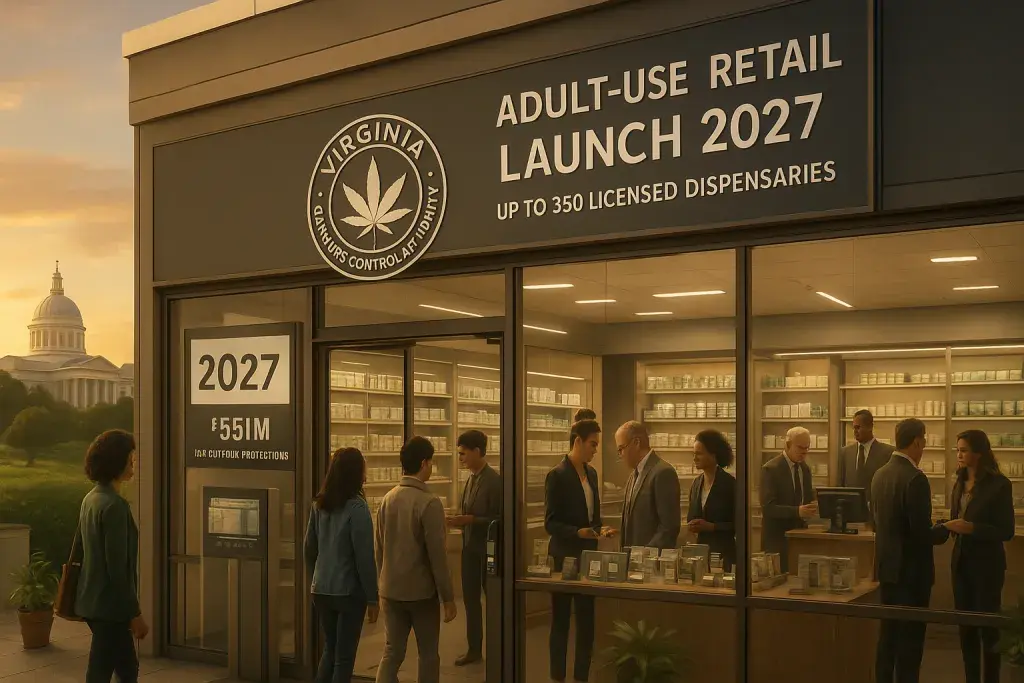
Virginia has cleared the last major legislative hurdle to launching a regulated adult-use cannabis retail market, with state budget legislation signed into law this week establishing a framework for up to 350 licensed recreational dispensaries to begin sales on July 1, 2027. The move closes a gap that has defined the state's cannabis policy since 2021: adults could legally possess marijuana, but there was no licensed commercial channel to buy it from. That gap didn't mean consumers stopped buying - it meant the illicit market filled the space instead.
The mechanics of the new program matter for operators and suppliers already watching Virginia closely. The Virginia Cannabis Control Authority will begin accepting retail license applications on February 1, ahead of the 2027 sales launch. The state will layer an excise tax on top of its standard sales tax, with combined revenue projected at roughly $51 million in the program's first year - a figure drawn from legislative budget documents. For cannabis technology vendors, payment processors, and compliance software providers assessing market entry, Virginia now joins a growing roster of states building out adult-use infrastructure. Operators in mature markets - like those deploying dispensary software in Michigan - have spent years refining seed-to-sale workflows, POS integrations, and inventory management systems that Virginia licensees will need to have operational from day one.
The law also raises the possession ceiling from one ounce to two ounces for adults 21 and older and preserves home cultivation rights. On paper, that's a consumer-friendly framework. In practice, though, it puts pressure on licensed retailers to price competitively enough to pull buyers out of an illicit market that has had years to establish itself. That's not a minor operational footnote - it's the defining retail challenge in every state that has tried to layer a regulated market on top of years of unregulated access.
What the License Cap Means for Market Structure
A hard cap of 350 retail licenses shapes everything downstream: real estate competition, wholesale pricing dynamics, brand shelf access, and the degree to which vertical integration becomes attractive. Operators in capped markets have strong incentive to secure multiple license categories - cultivation, processing, and retail - to control margins across the supply chain. Virginia's existing medical dispensaries, which were already operating under a vertically integrated structure, enter this market with a structural head start.
For new applicants, the licensing window opening in February 2027 will be competitive by design. States that have run similar processes - capped application rounds with social equity preferences - have seen significant demand from both in-state entrepreneurs and multi-state operators (MSOs) looking to add a new jurisdiction to their portfolio. Virginia's equity provisions, aimed at addressing documented disparities in marijuana enforcement against Black residents, will likely shape how the application scoring system is structured. Operators building a compliance strategy should watch the regulatory authority's application rules closely as they're released.
Compliance and Consumer Safety Obligations Will Be Immediate
Any retailer opening in Virginia in 2027 will face a full compliance stack from the first day of sales. That means product testing requirements, certificate of analysis documentation, compliant packaging and labeling, age verification protocols, and integration with whatever seed-to-sale tracking system the Virginia Cannabis Control Authority mandates. These aren't optional layers - they're the baseline for keeping a license.
The excise tax structure also deserves attention from operators running financial models. Virginia's combination of excise and sales taxes adds to the cost basis that retailers must manage without the ability to deduct ordinary business expenses at the federal level, given that cannabis remains a Schedule I controlled substance for most purposes. IRC Section 280E continues to apply to plant-touching businesses, meaning that tax planning - not just compliance planning - is a genuine operational pressure retailers need to price into their projections before applying for a license.
Virginia Sits at the Edge of a Regional Shift
Virginia's decision is notable in part because of where it sits geographically. The state remains an outlier among Southern states, most of which maintain prohibition or limit access to narrow medical programs. That regional isolation cuts two ways. It reduces near-term interstate competitive pressure for Virginia retailers - consumers in neighboring states with stricter laws aren't buying legally from Richmond dispensaries, so Virginia operators aren't fighting for cross-border market share. But it also means suppliers, brands, and technology vendors building regional distribution strategies will treat Virginia as a standalone market for now, rather than part of a contiguous adult-use zone.
At the federal level, the Trump administration's April announcement on reclassifying state-licensed medical cannabis represents a shift worth tracking - though it does not resolve the core tensions between state adult-use markets and federal law. Banking access, payment processing constraints, and 280E tax exposure all remain live issues for Virginia operators planning their business structures. Cannabis retailers across the country have worked around limited banking options for years; Virginia's new licensees will enter the same environment unless federal policy moves further. What's striking here is that the market architecture is being set in 2025 for a retail launch in 2027 - operators have time to build correctly, but not time to wait on federal clarity that may not come on any predictable schedule.