Vermont's licensed cannabis retailers are heading into the second half of 2024 with a materially different compliance and sales environment. A package of new state laws taking effect July 1 doubles the daily purchase limit for cannabis flower, establishes a pilot program for regulated outdoor sales events, and positions Vermont to potentially enter interstate commerce if federal rescheduling moves forward - three changes that, taken together, touch nearly every layer of dispensary operations from budroom inventory to wholesale planning.
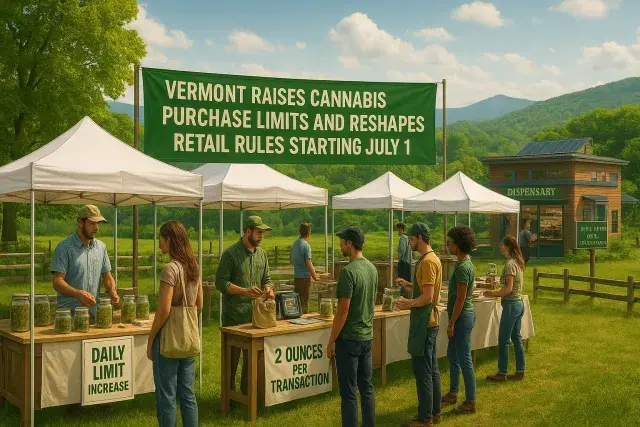
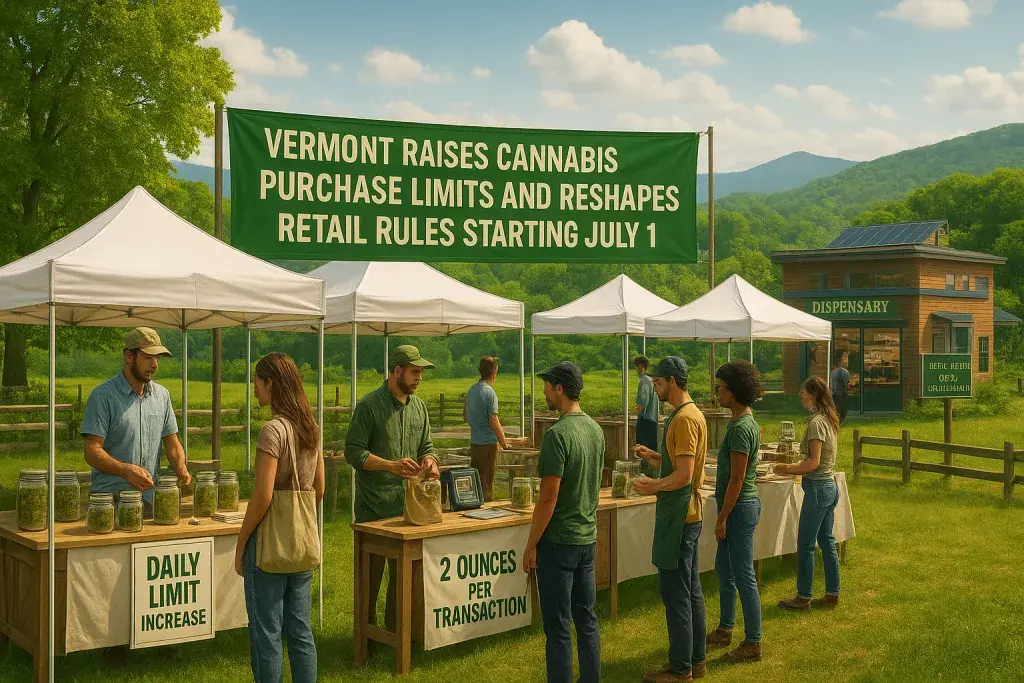
The headline shift for licensed retailers is straightforward: the daily flower purchase limit rises from one ounce to two ounces per customer transaction. The explicit intent from legislators is to pull illicit-market buyers into the regulated system by reducing the friction of multiple trips or the perceived value gap between legal and unregulated product. Whether that works depends on pricing, product selection, and consumer trust - none of which a purchase-limit adjustment fixes on its own. Retailers across other adult-use markets have long grappled with the same problem: compliance overhead keeps legal prices elevated while illicit supply remains largely price-stable. Vermont's operators will now have slightly more room to serve higher-volume customers in a single transaction, which has modest positive implications for average ticket size and throughput, but it won't close the price gap by itself. Dispensary operators elsewhere facing similar compliance cost pressures have turned to POS-integrated solutions to manage inventory accuracy and reduce shrinkage - operators researching their options may find value in reviewing how tools like IndicaOnline dispensary software in Minnesota have helped retailers in comparable regulated markets manage purchase limits, customer records, and daily transaction caps at the point of sale.
The pilot event program deserves close attention from operators, brand partners, and cultivators alike. The law authorizes ten licensed-retailer-sponsored public events over a two-year window, structured something like a farmers market, where customers can meet and buy directly from local cultivators. That's a meaningful departure from standard dispensary retail. For cultivators, it opens a direct consumer touchpoint that the conventional wholesale-to-retailer model doesn't allow. For licensed retailers acting as event sponsors, it creates new compliance obligations: who is responsible for age verification at an outdoor venue, how seed-to-sale tracking integrates with pop-up sales, and what happens when a product batch sold at an event needs to be recalled. None of those questions have operational answers yet - the regulatory details will matter enormously.
The Interstate Compact Provision Is a Long Game
Buried in the same legislation is a provision allowing Vermont to join a regional interstate cannabis compact - but only if the federal government reschedules cannabis from Schedule I to Schedule III, and only at the governor's discretion. Both conditions create significant uncertainty. The Trump administration has indicated it is considering rescheduling, but "considering" is not a timeline, and Schedule III reclassification does not automatically legalize interstate commerce. Still, for multi-state operators and wholesale suppliers watching Vermont's market, the provision signals that the state's legislators are thinking beyond its borders. If rescheduling does occur, Vermont's compact authority could accelerate regional supply chain consolidation faster than most operators have modeled.
Beyond Cannabis: What the Rest of Vermont's July 1 Package Signals
Vermont's broader legislative batch offers a window into how state governments are treating consumer protection across product categories - and cannabis retail isn't alone in facing tighter rules. The new ticket resale law, which caps third-party resale markups at 10% above venue price and bans deceptive URLs, reflects the same regulatory instinct driving cannabis disclosure requirements: transparency about who is actually selling a product and at what markup. These aren't unrelated philosophies. Regulated retail - whether event tickets or adult-use cannabis - is increasingly being held to a standard where the end consumer must know exactly what they're buying, from whom, and at what price.
The voyeurism statute overhaul, which extends the statute of limitations from three years to 40 years and adds harsher penalties when victims are minors, is a reminder that Vermont's July 1 package covers serious ground well outside commerce. And the balcony solar legislation - making Vermont the eighth state to allow plug-in solar panels without utility commission approval - has indirect relevance for cannabis operators. Cultivation and retail facilities carry significant energy loads; any expansion of accessible, lower-cost renewable energy options is worth tracking, even if the current law's 1,200-kilowatt system cap limits practical application for commercial operations.
What Operators Should Do Before the Rules Hit
For Vermont's licensed cannabis retailers, the immediate operational priority is updating purchase-limit logic in point-of-sale systems before July 1. A system still capped at one ounce per transaction after the new limit takes effect creates compliance exposure in the other direction - not because selling two ounces becomes illegal, but because incorrect system configuration can generate inaccurate transaction records, which creates problems during a state audit. Compliance logs need to reflect the correct daily limit from day one.
Wholesale menus and inventory planning also warrant a look. If licensed retailers expect higher per-transaction volume from existing customers - or modest new customer acquisition from the illicit market - flower inventory forecasting should be adjusted accordingly. Cultivators supplying those retailers may see incremental demand shifts. The effect won't be dramatic immediately, but it's a variable that changes the math on reorder cycles and wholesale pricing negotiations heading into the summer season.
The event pilot program is further out, but retailers interested in sponsoring one of the ten authorized events should start asking questions now - specifically, what the Cannabis Control Board's event licensing requirements will look like and how seed-to-sale tracking obligations apply outside a fixed retail location. Getting ahead of those regulatory details is considerably easier before the program launches than after.