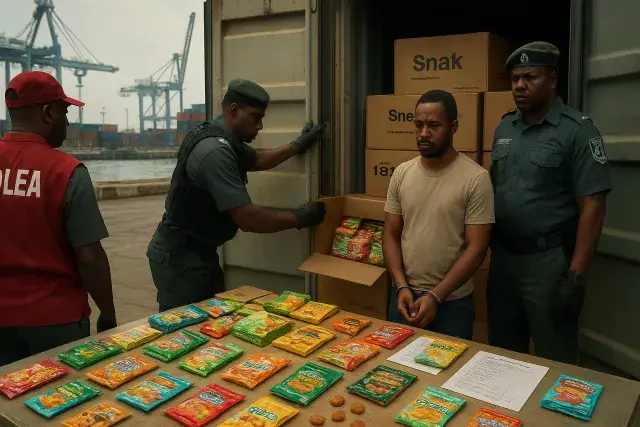
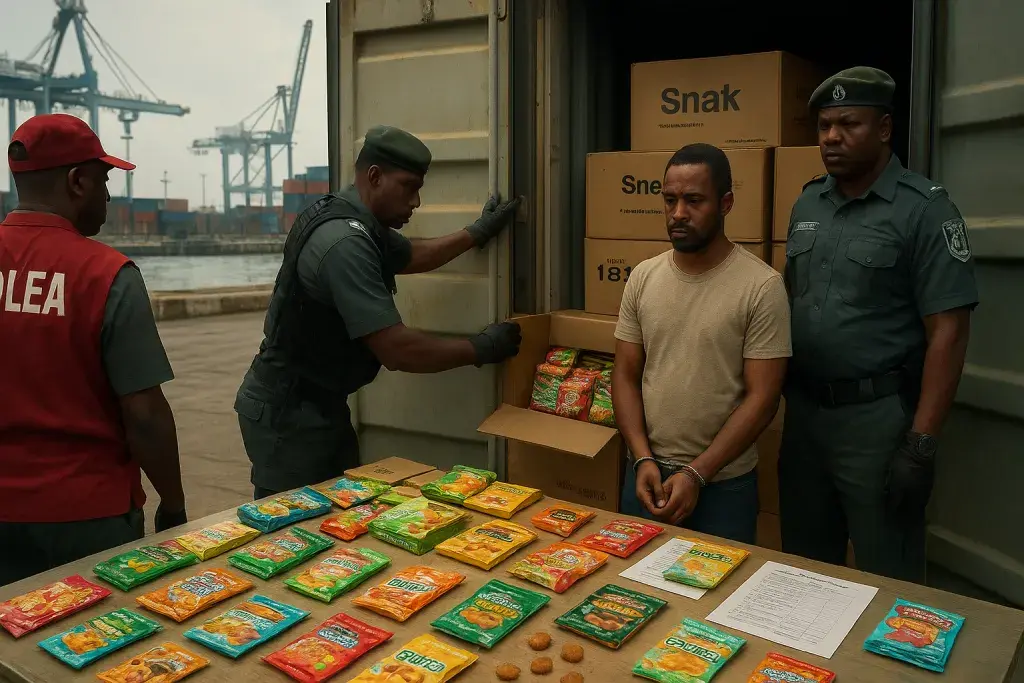
Nigerian counter-narcotics agents pulled 442 packets of cannabis-infused cookies and gummies, totaling 309.4 kilogrammes, out of a 40-foot shipping container at the TinCan Island Port Complex in Lagos on August 4. The consignment, packed into 73 cartons and disguised among legitimate freight, was flagged during a joint inspection by the National Drug Law Enforcement Agency, the Nigeria Customs Service, and allied security units. One suspect, Larry Nnaji, was arrested; the case is part of a wider run of seizures the NDLEA logged across several states between August 3 and 8.
What's striking here isn't just the volume, it's the form the product took. Infused edibles are harder to detect than raw plant material and easier to mislabel, which is exactly why jurisdictions that permit legal cannabis commerce lean so heavily on seed-to-sale tracking, batch-level lab testing, and tamper-evident, child-resistant packaging before a gummy ever reaches a shelf. In a regulated market, that same product would need a certificate of analysis, standardized dosing, and a manifest trail from cultivator to dispensary; operators in the United States managing that chain, for instance, increasingly depend on systems built around Metrc-compliant POS for Rhode Island to keep inventory logs and state reporting aligned in real time. Nigeria has no such licensed framework, so any infused product entering the country arrives entirely outside consumer-safety oversight, regardless of how professionally it's branded or packaged.
Why Edibles Complicate Enforcement
Cannabis-infused confectionery presents a distinct problem for customs and drug-control agencies worldwide. Unlike bulk skunk or resin, edibles can be shelf-stable, shelf-branded, and visually indistinguishable from ordinary snack goods, making manifest audits and physical inspection far more labor-intensive. The NDLEA's other actions during the same week, including a 731.03kg warehouse raid in Oyo State and a 604.5kg seizure of jumbo bags in Edo State, involved raw plant material that's comparatively easier to identify. The TinCan case required a joint examination specifically because a finished consumer product concealed in general cargo doesn't announce itself the way loose bulk does. Metrc-compliant POS for Rhode Island
The Compliance Lesson for Legal Markets
For operators in jurisdictions where adult-use or medical cannabis is licensed, this seizure is a reminder of why regulators keep tightening packaging and lab-testing rules rather than loosening them. Compliant markets require child-resistant packaging, potency labeling backed by COA data, and inventory reconciliation against seed-to-sale platforms precisely to prevent the kind of unregulated, untraceable product flow seen in this case. Wholesale brands operating across state lines already juggle differing excise tax structures, SKU management rules, and advertising restrictions; a case like this underscores why compliance logs and testing documentation aren't bureaucratic overhead; they're the mechanism that separates a lawful edible from contraband.
Enforcement Pattern and Market Signal
Taken together with arrests in Abia and Lagos states and the recovery of skunk from a wanted dealer in Badagry, the TinCan seizure fits a pattern the NDLEA describes as sustained multi-command pressure rather than an isolated event. Agency chief Brig. Gen. Mohamed Buba Marwa (retd.) commended the units involved and directed personnel to keep enforcement paired with broader demand-reduction measures. For B2B stakeholders watching cannabis trade routes globally, incidents like this reinforce a plain point: wherever legal frameworks lag behind product innovation, illicit supply chains will keep finding room to move.