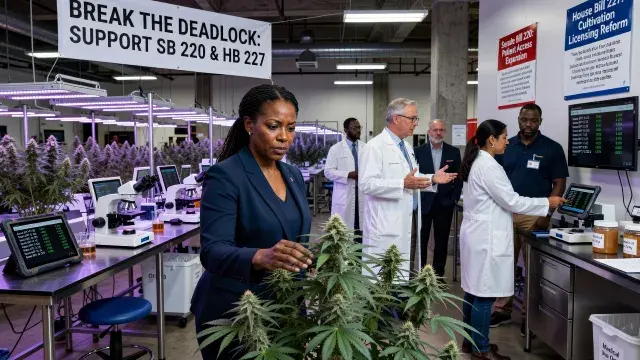
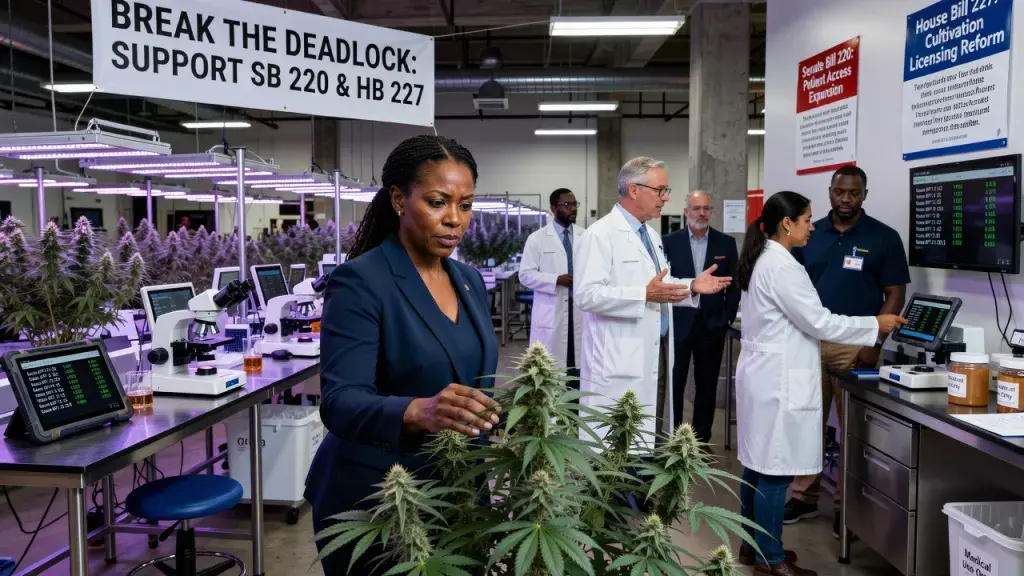
A decade after Georgia legalized medical cannabis, the program remains stuck in a holding pattern that operators, doctors, and patients say no longer serves the people it was built for. In Macon-Bibb, Fine Fettle - one of only three licensed medical cannabis producers in the state - opened its cultivation and manufacturing facility to state lawmakers, physicians, and patients in an effort to move a stalled policy conversation forward. The tour was less about public relations and more about demystifying a supply chain that most legislators have never actually seen up close.
That gap between regulation and operational reality is a familiar problem across licensed cannabis markets. Compliance frameworks are often written before lawmakers fully understand seed-to-sale tracking, batch testing, or how a vertically integrated operator actually moves product from cultivation to dispensary shelf. States with more mature programs have leaned on data infrastructure to close that gap - platforms like cannabis crm massachusetts operators use to manage patient records, inventory, and compliance reporting offer a useful comparison point for what a scaled, well-supported medical program can look like once the back-end systems catch up to the policy intent. Georgia's program, by contrast, is still working through basic access and product-availability questions that other states resolved years ago.
State Representative Anissa Jones, who joined the Macon tour, said seeing the production process firsthand changed how she thinks about oversight. Her comment - that the product isn't "folks out there just growing stuff wild in nature" - points to a persistent public misconception that licensed cultivation is loosely supervised. In practice, it isn't. Licensed medical cannabis producers operate under cultivation logs, lab testing requirements, and compliant packaging standards designed to produce a consistent product batch after batch, not a one-off harvest.
Why the Legislative Stall Matters for Patients and Operators
Senate Bill 220 and House Bill 227 both aimed to expand the medical cannabis program - easing access to medical cannabis cards and updating allowable product forms. Neither made it through the chambers. For operators, that stall has real business consequences: a narrow list of approved product forms limits SKU management and wholesale menu flexibility, while restrictive card-access rules cap the addressable patient population that licensed dispensaries can legally serve. Fewer patients and fewer product categories mean tighter margins in a market that already carries heavy compliance overhead.
The Clinical Gap Behind the Policy Debate
Dr. Elmore Alexander's concern - that current offerings treat roughly 80% of patients but leave a critical 20% without adequate options - frames the stakes in practical terms. Expanding product forms isn't a cosmetic change; it directly affects whether physicians can match patients to appropriate treatment options within a legal, tested, and regulated supply chain. Without that expansion, some patients may seek unregulated alternatives outside the state's testing and labeling safeguards, which undercuts the consumer-protection rationale the program was built on in the first place.
For Georgia's licensed operators, the path forward depends heavily on whether lawmakers treat these tours as a starting point rather than a courtesy visit. Fair enough, facility walkthroughs won't rewrite a bill by themselves. But they do put faces, patient stories, and operational detail in front of the people who control whether Georgia's medical cannabis market stays narrow or finally grows into something closer to what patients and providers say they need.