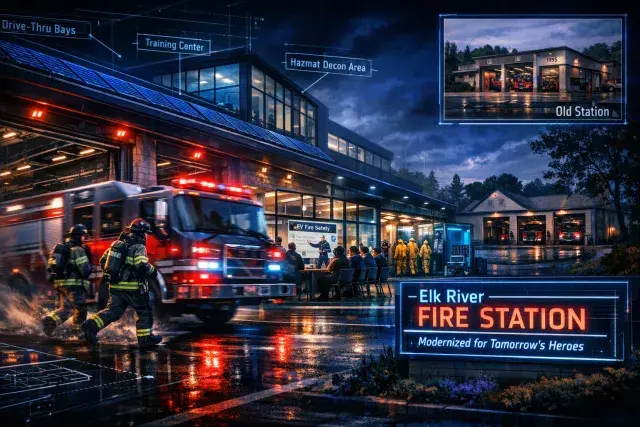
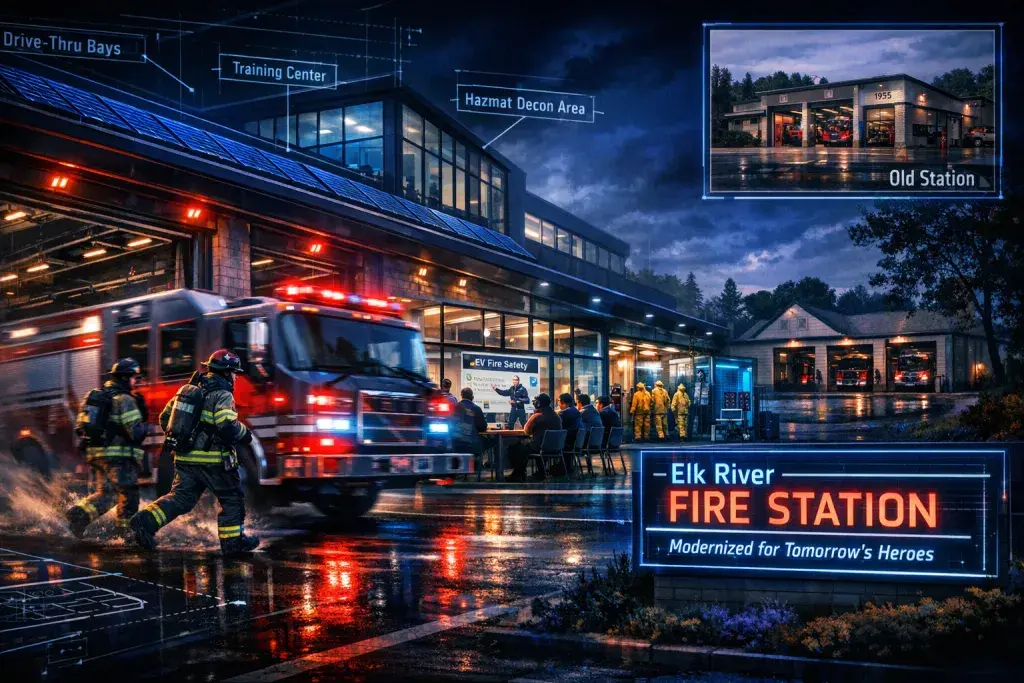
In Elk River, Minnesota, city officials are finalizing designs for a new fire station that prioritizes space for oversized equipment, expansive training classrooms, properly scaled decontamination areas, and drive-through bays tailored for today's fire apparatus. This upgrade addresses critical gaps in the community's aging infrastructure, enhancing response times and public safety amid rising urban demands.
Key Features Designed for Contemporary Needs
The proposed fire station reflects forward-thinking architecture, submitted by CNH Architects, to accommodate the evolution of firefighting technology. Modern fire trucks and apparatus have grown larger and more complex, demanding facilities that support rapid deployment and maintenance.
- Sufficient space for equipment storage, preventing overcrowding in current setups.
- Large classrooms for firefighter training and community education programs, fostering proactive safety awareness.
- “Appropriately sized” decontamination zones to handle hazardous materials incidents safely and efficiently.
- Drive-through apparatus bays enabling quick access and exit, crucial for minimizing response delays.
Overcoming Challenges of an Aging Station
Elk River's existing fire station, built decades ago, struggles with spatial constraints and outdated layouts ill-suited for contemporary emergencies. As urban areas expand, fire departments nationwide face similar issues: equipment that's 20-30% larger than in the 1990s, per National Fire Protection Association data, and increased calls involving chemicals and medical hazmat. This project tackles these by integrating decontamination facilities sized for full-team processing, a standard now recommended for stations in growing suburbs to mitigate secondary exposures.
Broader Implications for Community Resilience
Beyond immediate operational gains, the new station aligns with national trends in public safety infrastructure. With fire-related incidents rising 5-10% annually in mid-sized U.S. cities due to development and climate factors, investments like this yield long-term benefits: faster response times could save lives and property, while public education spaces promote prevention. Elk River's approach sets a model for other municipalities, emphasizing adaptability to electric vehicles, drones, and advanced hazmat protocols in fire services.
By prioritizing these elements, Elk River not only modernizes its firefighting capabilities but also invests in a safer future for residents, underscoring the vital role of strategic planning in emergency services.