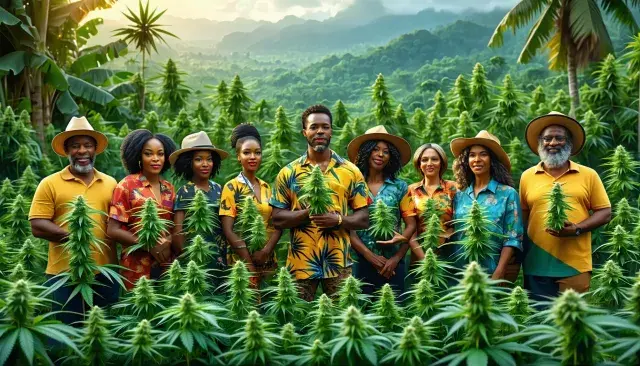
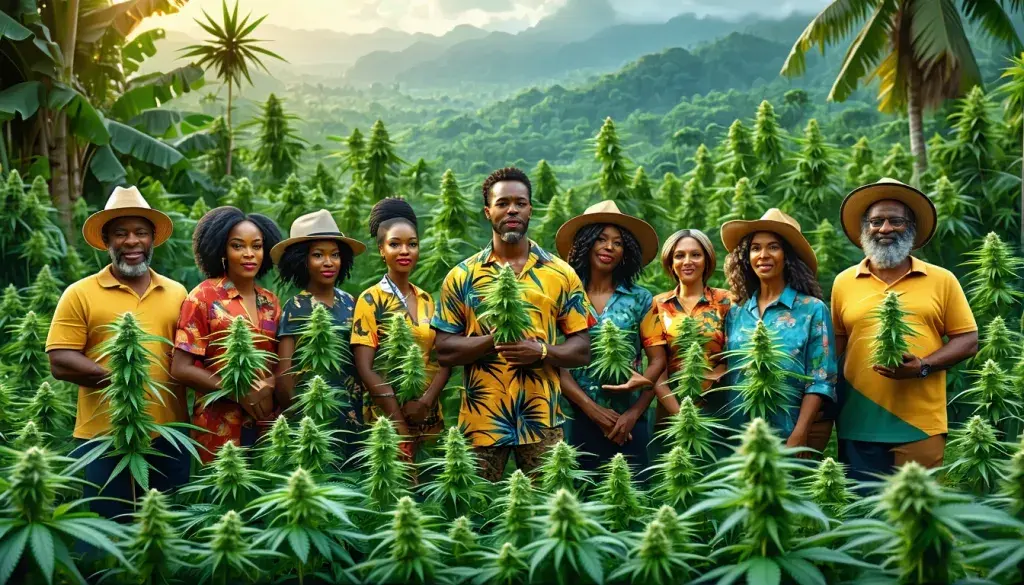
A decade after decriminalization began reshaping Jamaica's relationship with cannabis, the country's Cannabis Licensing Authority launched a new permitting program on April 16 designed to do something the existing framework consistently failed to accomplish: bring traditional farmers, rural retailers, and patients with limited mobility into a legal industry that had largely grown around them. The Medical Cannabis Special Permit Program introduces amended licensing regulations, delivery authorization, and fee-free entry pathways for community farming groups - changes modest in scope but significant in what they signal about where the industry is heading.
A Long History, A Late Reckoning
Cannabis arrived in Jamaica in the late 1800s, carried by indentured laborers from South Asia, and embedded itself into the island's agricultural, spiritual, and cultural fabric over generations. The colonial-era ban that followed in 1913 didn't erase that relationship - it just criminalized it. For over a century, the plant that would eventually anchor a multimillion-dollar legal industry was treated as a social menace, and the farmers who grew it were pushed to the margins of an economy that had no formal place for them.
The 2015 amendments to the Dangerous Drugs Act changed the legal architecture, if not the economic realities underneath it. Possession of up to two ounces was reclassified as a petty offence. Cultivation of five or fewer plants became permissible. Medical consumption received statutory protection, and tourists carrying valid cannabis prescriptions gained a route to purchase small quantities legally. The CLA was empowered to regulate the sector. On paper, a framework existed. In practice, the compliance costs - complex licensing requirements, high fees, mandatory physical infrastructure - kept the very farmers who had grown cannabis for decades locked out of the regulated market they theoretically had access to.
That gap is exactly what the new program attempts to close. "For decades, traditional farmers have operated outside the formal framework, not by choice, but due to structural barriers, high compliance costs, complex licensing and limited access to capital," said Maurice Ellis, president of Ganja Growers and Producers, at the program's launch. The phrasing is precise and worth sitting with: not by choice. Informality, in this context, was not a preference. It was the only option available.
What the New Permits Actually Do
The Medical Cannabis Special Permit Program introduces several distinct regulatory amendments, each targeting a specific friction point in the industry's existing structure.
- The Special Community Permit carries no application fee and allows small-scale or traditional farmers to enter the regulated market as a collective, granting access to technical support through the Cannabis Specialization Unit and the right to sell in licensed spaces.
- The Cultivator's Special Transitional Permit provides a two-year window for traditional farmers to complete their move into the formal regulatory space without being immediately subject to the full compliance burden of standard licensure.
- A standardized fence height requirement - now set at six feet across all cultivation tiers, down from eight feet for tier two and three licensees - reduces rebuilding costs after natural disasters and simplifies movement between licensing levels.
- Cannabis delivery authorization is now permitted for retailers, extending access to patients who are elderly, immobile, or otherwise unable to visit a dispensary in person.
The delivery provision drew particular attention from Kimberly Myrie, a retailer and authorization holder who described her early frustration at being unable to serve patients who couldn't reach her storefront. "The introduction of the delivery option puts us right on their doorstep," she said. For a medical product - which cannabis formally is, under Jamaica's regulatory structure - that's not a convenience feature. It's an access issue. The fact that delivery wasn't permitted until now says something about how the framework was originally built, and for whom.
Economic Weight Behind the Policy Shift
Jamaica's legal cannabis market was valued at $63.5 million USD in 2025, up from $38.9 million the previous year - a substantial single-year increase that reflects both growing domestic demand and expanding international interest in Caribbean-sourced product. The sector held up even through Hurricane Melissa, which caused widespread damage across the island; emergency and disaster protocols kept crops and inventory intact, demonstrating a degree of supply-chain resilience that many agricultural sectors in the region lack.
Minister of State Delano Seiveright of the Ministry of Industry, Investment and Commerce framed the industry not as a niche export sector but as infrastructure for broader economic development - "a vehicle for economic empowerment, job creation, scientific advancement and social equity," in his words. That framing matters. It positions cannabis alongside agriculture, pharmaceuticals, and medical tourism as part of a diversified national development strategy, rather than treating it as a regulated vice industry to be carefully contained.
The long-term ambition, as articulated by both the CLA and the MIIC, is a fully export-capable Jamaican cannabis sector - high-quality products reaching regulated markets globally, rural economies transformed by formal employment in cultivation, extraction, and processing, and a national reputation built not just on heritage but on regulatory rigor. What's striking here is the deliberateness of that framing: Jamaica wants to be known for how it regulates this industry, not just that it has one.
The Work Still Ahead
Ellis, who applauded the new permits, was careful not to let the moment substitute for the larger transformation still required. "Permits alone will not deliver transformation," he said. "To ensure success, we must simplify the application process, provide technical and financial support to small farmers, and ensure guaranteed pathways for legally grown product. If not, we risk formalizing exclusion rather than expanding participation."
That last phrase - formalizing exclusion - is the right warning. Regulatory frameworks have a way of enshrining the conditions of their creation. If the new permits lower the entry threshold without simultaneously providing the capital access, technical guidance, and market linkages that small farmers need to survive in a competitive industry, the result is a formalized two-tier system rather than a genuinely inclusive one. The architecture of inclusion has to be functional, not just legible.
CLA Chairperson Dr. Nadine Spence acknowledged the external pressures shaping the industry's trajectory: "The industry is still growing, and its sustainability and successes rely not only on the local regulatory and policy environment, but also on the global cannabis market realities and the regulatory environment within which this market has to operate." Global cannabis markets are volatile, heavily influenced by the pace of legalization in large economies, shifting export regulations, and the growing competitiveness of established producers. Jamaica's domestic policy clarity is necessary but not sufficient. What the country builds at home will only matter if it can hold its own in a market that won't wait for anyone to catch up.
For now, though, the April 16 launch represents something real: a regulatory body using its mandate to actively reduce the distance between a historically criminalized practice and a formally recognized industry. After more than a century of exclusion, that is not a small thing - even if it is very much a beginning.