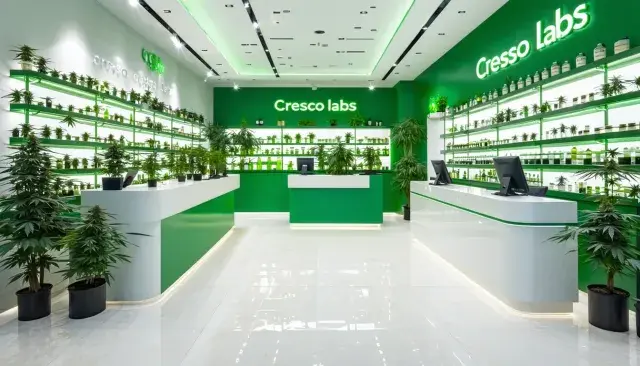
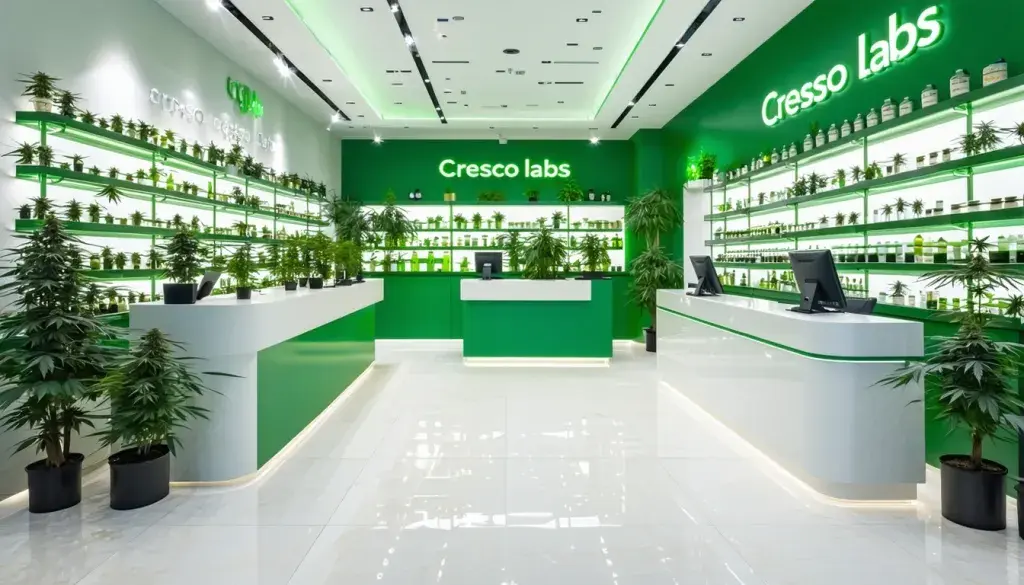
Cresco Labs expanded its Sunnyside retail footprint into Bridgeport, Ohio on Friday, opening the company's 73rd dispensary nationally and seventh in the state at 435 Main St. The location serves both medical cardholders and adult-use customers in a rural Belmont County community that, until now, had limited cannabis retail access - and sits directly on the Ohio-West Virginia border, where recreational use remains illegal.
Why Bridgeport, and What the Location Logic Tells Operators
Site selection at a multi-state operator like Cresco Labs doesn't happen by accident. Benjamin Keaton, Cresco's district manager for Ohio, put it plainly: parts of the state are oversaturated with dispensaries, and Bridgeport isn't one of them. The village sits at the confluence of State Route 7, U.S. 40, and Interstate 70 - a genuine traffic crossroads - and shares a border with West Virginia, where adult-use sales are not permitted.
That geography matters commercially. A dispensary positioned at a legal-state border can draw customers who would otherwise have no compliant, legal access to cannabis retail. For operators evaluating expansion markets, the Bridgeport model reflects a broader strategic calculus: lower retail density can offset the smaller population base, particularly when cross-border demand is a realistic factor. What's striking here is how often that analysis gets overlooked in favor of chasing urban markets that are already crowded.
The new location is the second dispensary in Belmont County overall and the first for Cresco Labs in that county. Mayor Norma Teasdale publicly welcomed the opening, describing the business as secure and safe - language that signals the kind of local government buy-in that operators frequently struggle to obtain, especially in smaller communities where zoning battles and public hearings can delay or kill a license entirely.
Medical and Adult-Use Under One Roof: The Tax Distinction Operators Must Communicate Clearly
Sunnyside carries a full product menu - flower, vape cartridges, edibles, tinctures, topicals, gummies - available to both medical patients and adult-use customers. Keaton was direct about the operational distinction: the products themselves are generally the same; what changes is the tax treatment.
In Ohio, registered medical cardholders purchasing with a valid card pay at a discounted tax rate relative to adult-use buyers. That gap in tax liability is material to consumer behavior, particularly for regular purchasers who use cannabis for consistent, ongoing needs. Budtenders at dual-use dispensaries carry a compliance responsibility here - correctly categorizing each transaction at the point of sale isn't optional. A misclassified medical sale creates a tax discrepancy that surfaces during state audits and can trigger penalty assessments.
For operators running POS systems across multiple locations, consistent staff training on tax-tier selection at checkout is an operational control that deserves the same attention as inventory reconciliation. One misrouted transaction is a rounding error; a pattern of them is a compliance exposure.
Retail Format and Store Parameters
The dispensary operates daily from 9 a.m. to 9 p.m. and is open to customers 21 and older for adult-use purchases, with medical access available to valid Ohio cardholders. Orders can be placed in-store or placed online through Sunnyside's website - a standard dual-channel approach that most licensed retail operators now maintain to manage queue flow and reduce wait times during peak hours.
One detail worth noting for operators thinking about physical format: the building is a former bank, which included a drive-through lane. Sunnyside will not be using it. Drive-through cannabis sales involve a separate layer of regulatory scrutiny in most states - Ohio included - and operators frequently weigh whether the compliance overhead and local approval process justify the throughput benefit. The decision to forgo the drive-through here is, in practice, the simpler path.
What This Opening Reflects About MSO Retail Strategy in Ohio
Ohio's adult-use market - legalized by voter approval in November 2023 and operational for adult sales since mid-2024 - is still maturing. Early adult-use rollouts in other states have consistently shown that the first months bring high consumer interest and strong per-door sales, followed by normalization as more licenses are issued and competition increases. Cresco's push into lower-density markets like Bridgeport suggests the company is prioritizing durable, defensible retail positions over fighting for share in already-contested metro corridors.
For smaller operators, regional brands, and cannabis wholesalers supplying Ohio dispensaries, a store like this one represents a reliable wholesale relationship in a market segment that isn't yet subject to aggressive price compression. Whether that window stays open depends on how quickly Ohio's licensing pipeline fills in rural and border-adjacent counties - which is, ultimately, a regulatory and policy question as much as a market one.