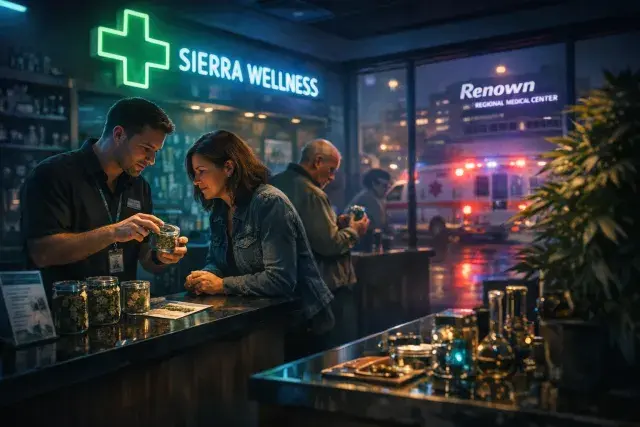
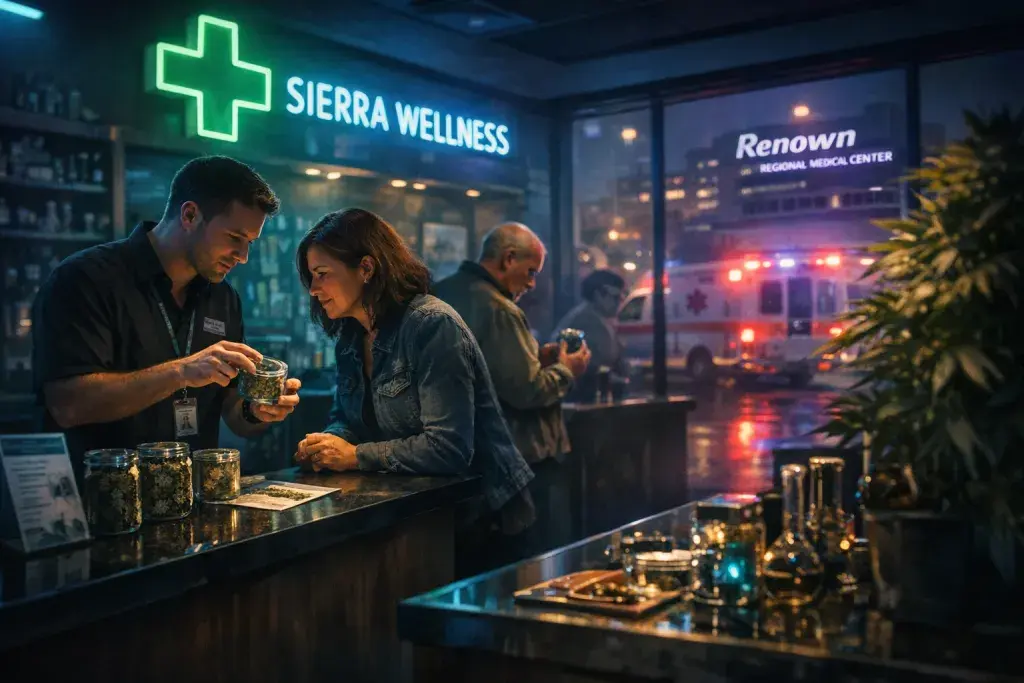
Nestled among medical offices east of downtown Reno, Sierra Wellness Connection debuts as the city's inaugural medical marijuana dispensary on Wednesday at 1605 E. Second St., near Renown Regional Medical Center. The facility dispenses strains like Purple Kush and Sour Diesel rather than standard pharmaceuticals, marking a milestone in Nevada's medical cannabis landscape. Its launch underscores growing acceptance of marijuana as legitimate medicine amid federal restrictions.
Professional Setup Meets Patient Education
Steve Rausch, vice president, emphasizes the dispensary's pharmacy-like appearance as intentional design. Staff provide guidance on strain differences and dosages, supported by informational books and videos. The outlet stocks at least six marijuana varieties plus glassware, catering to patients seeking targeted relief. Joe Crowley, former University of Nevada, Reno president and director here, views this expansion as a national shift, noting marijuana's ancient roots and rising publicity.
In-House Cultivation Ensures Quality Supply
President Morgan Carr distinguishes Sierra Wellness Connection through its on-site cultivation facility, which grows plants around the clock to sidestep federal transport felonies for Schedule I substances. The four-month growth cycle demands precision: weekly selection of 80 to 90 top plants for rooting, with rooms maintained at 75 degrees and 30 percent humidity to prevent defects. Carr claims this yields cleaner, more potent trim with higher psychoactive content than black market alternatives, offering strains for ailments from chronic pain to cancer.
Strain Selection Tailored to Symptoms
Indica strains address physical issues like muscle spasms and insomnia, while sativas target mental conditions such as depression and fatigue. Carr explains subcategories within these allow customization—some patients avoid heavy sedatives to stay active, others seek strong relaxation. "Everybody wants different things in their medicine," he says. Manager Eva Grossman, a patient herself, focuses on demystifying access to safe, affordable options for wellness.
Legalization's Broader Impacts
Nevada legalized medical marijuana in 2000 alongside Colorado and Hawaii; Colorado advanced to recreational sales in 2014. Carr observed urban renewal near Colorado dispensaries, where security and regulation displaced blight. Denver data showed violent and property crimes down 2.2 percent in early 2014, burglaries by 9.5 percent. A 2014 medical journal report linked medical marijuana laws to 25 percent drops in fatal prescription painkiller overdoses. Colorado collected over $50 million in tax revenue that year, exceeding constitutional limits. Sierra plans Carson City expansion, prioritizing patient support over casual markets.