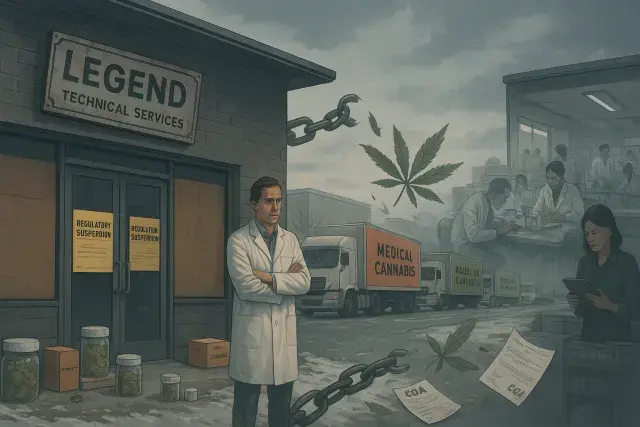
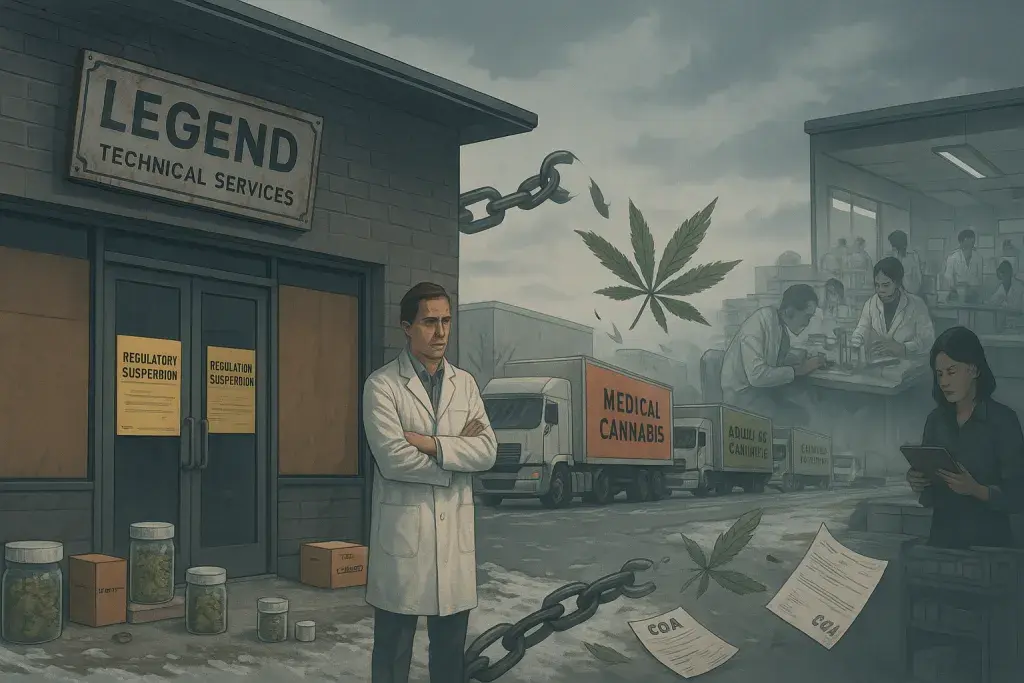
Legend Technical Services, Minnesota's oldest licensed cannabis testing laboratory, has decided to shut down permanently rather than seek reinstatement of its license after state regulators suspended its operations less than a month ago. The decision removes one of only four state-authorized facilities capable of running the full suite of potency and safety tests required before medical and adult-use cannabis products can legally reach store shelves. For an industry already wrestling with testing bottlenecks, the timing could not be worse.
The practical weight of that loss depends on how much throughput the remaining three labs can absorb - and right now, that answer is unclear. Testing backlogs are not unique to Minnesota; regulated cannabis markets from the coasts to the Midwest have struggled at various points with lab capacity constraints that slow down the movement of compliant product from cultivators and processors to dispensary wholesale menus. States that rely on a small number of licensed testing facilities have consistently found themselves exposed when any single lab stumbles. Operators in other markets dealing with supply chain visibility gaps - whether through compliance tools or technology like a cannabis dispensary pos maine integration - understand that the chain from cultivation to certificate of analysis to retail shelf has very little slack in it. Remove one link without warning, and the whole timeline slips.
Legend's decision to exit rather than fight for reinstatement is worth pausing on. Pursuing license reinstatement in a regulated cannabis market is not a trivial undertaking - it typically involves documented corrective actions, regulatory review, potential audits, and no guaranteed outcome. For a testing lab operating in a state where the licensing framework is still maturing and where the cost of compliance infrastructure runs high, the calculus of spending capital on a reinstatement process with uncertain odds against simply winding down may be grimly rational. That does not make it any less disruptive for the licensed businesses that depended on Legend's services.
What a Testing Lab Shutdown Actually Means for Operators
Every batch of cannabis flower, concentrate, or infused product that moves through Minnesota's licensed supply chain requires a certificate of analysis - a COA - issued by a state-approved lab before that product can be sold legally, whether at a medical dispensary or an adult-use retail counter. Without a passing COA, inventory sits. It does not move to wholesale. It does not reach the budroom. It generates no revenue.
With Legend gone, cultivators and processors who had established workflows and turnaround expectations with that lab now have to requalify with one of the three remaining facilities. Lab relationships in this industry matter more than they might appear to from the outside. Submission scheduling, sample handling logistics, testing prioritization, and turnaround times are all negotiated through ongoing business relationships. Walking into a new lab mid-cycle, in a market where those labs are presumably now absorbing increased volume, means longer waits and potential disruption to wholesale supply commitments.
Dispensary operators on the retail end feel this downstream. Thinner wholesale menus, delayed product launches, and gaps in specific categories - flower strains, particular concentrate formats, specific potency tiers - are the retail-floor consequence of upstream testing delays. Buyers can't sell what hasn't been tested. That's a straightforward business problem with no quick fix.
The Structural Risk of Thin Lab Markets
Minnesota's situation puts a sharp point on a structural vulnerability that regulators in smaller cannabis markets have not fully solved: what happens when a licensed testing lab fails? Four labs is not a large number for a state running both a medical program and a growing adult-use market. The redundancy is limited by design - state licensing frameworks for testing labs tend to be restrictive, for defensible reasons around quality control and regulatory oversight, but that same restriction leaves the market exposed when a licensee exits.
The underlying concern is not abstract. Cannabis testing labs occupy a specific and non-substitutable role in the compliance chain. They are not interchangeable with other vendors. A dispensary that loses access to its point-of-sale software can often find a replacement quickly. A cultivator whose testing lab shuts down cannot simply redirect samples to an unlicensed facility or to a lab in another state - state compliance frameworks don't allow it. The product waits, or it doesn't move at all.
Regulators in Minnesota will presumably need to address lab capacity as a policy matter, whether through expedited licensing for new entrants, expanded capacity requirements for existing licensees, or other mechanisms. In the meantime, the three remaining labs are carrying a heavier load - and every licensed cultivator, processor, and dispensary operator in the state has one fewer option.
A Cautionary Moment for Cannabis Market Infrastructure
Legend's exit is a reminder that the operational infrastructure supporting legal cannabis - testing labs, compliance software, licensed distributors, secure payment processors - is still fragile in many state markets. These are not yet mature, redundant systems. They are, in many cases, small businesses operating under heavy regulatory constraints with thin margins and limited access to conventional financing, the same structural pressures that affect the licensed operators they serve.
When one of those infrastructure providers fails, the disruption moves fast and sideways through the supply chain. Dispensary operators, wholesale buyers, and product brands don't always have contingency plans for testing lab shutdowns because, until recently, most markets hadn't faced one at this scale. Minnesota's experience is a case study in what it costs when market infrastructure is built thin. Other state markets - including newer adult-use programs still licensing their first wave of testing facilities - would do well to take note.