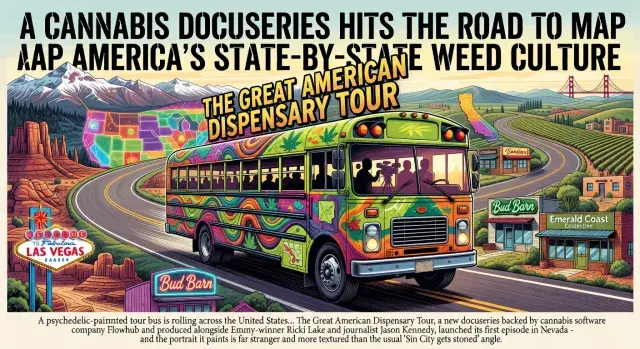
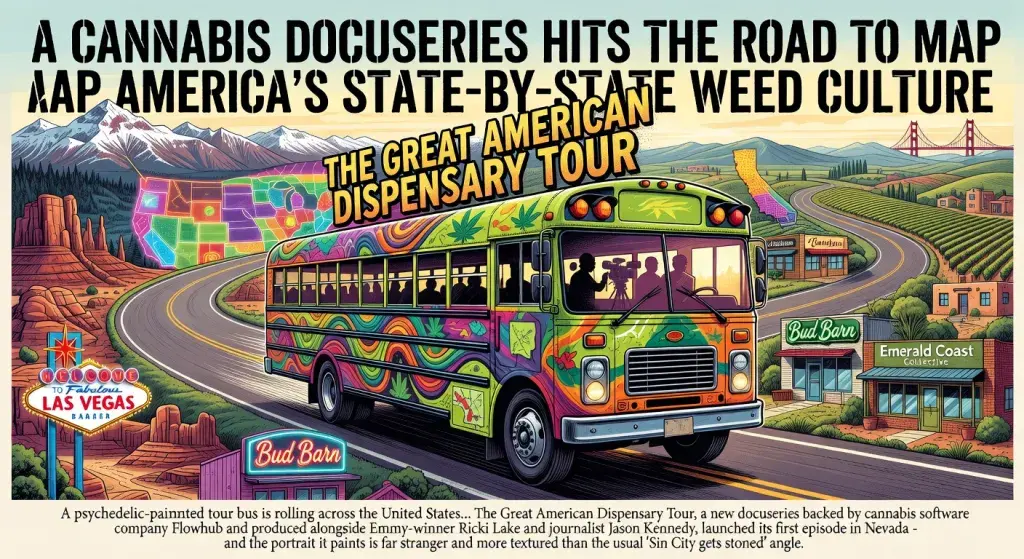
A psychedelic-painted tour bus is rolling across the United States, and the show it's filming wants to do for legal cannabis what food television did for regional cuisine: make you care about the local stuff. The Great American Dispensary Tour, a new docuseries backed by cannabis software company Flowhub and produced alongside Emmy-winner Ricki Lake and journalist Jason Kennedy, launched its first episode in Nevada - and the portrait it paints is far stranger and more textured than the usual "Sin City gets stoned" angle.
Why a Road Show, and Why Now
Here's the structural oddity that makes a series like this possible: because cannabis remains federally illegal, every legal state is essentially its own island. Nothing crosses state lines. Every flower sold in a Nevada dispensary was grown in Nevada. Every edible on a Massachusetts shelf was manufactured in Massachusetts. The result is a patchwork of regional industries with distinct genetics, growing conditions, product cultures, and regulatory regimes. Sherman, Flowhub's founder and CEO who hosts the series, puts it plainly: "It's entirely different state to state."
That federal bottleneck - the thing the industry most wants to see removed - is, paradoxically, what gives the show its premise. Cannabis terroir is real, even if no one's stamping appellations on pre-rolls yet. Different climates, different soil, different regulatory frameworks all shape what ends up on the shelf. Indoor grows in Vegas yield something distinct from outdoor farms in Northern California. A road trip, then, isn't a gimmick. It's the only honest way to survey the industry.
Nevada: More Than the Strip
The first 30-minute episode opens at MJBizCon, the industry's sprawling annual trade conference in Las Vegas, then fans out. Viewers visit Thrive, a dispensary just off the Strip packed with product. They tour extraction labs and cultivation facilities. They see consumption lounges - Nevada was among the first states to license them - which remain rare nationally.
But the episode's sharpest move is driving eight hours north to Winnemucca, an old mining town where a veteran-owned dispensary called Gold Leaf operates as a genuine community hub. Sherman, who admits he'd never heard of the place before filming, compares it to finding a Michelin-starred restaurant in the middle of nowhere. "You end up finding products that maybe you would have never tried before," he says. "You're working with a great budtender teaching you what they know about that area."
The juxtaposition works. Nevada has Planet 13, the world's largest cannabis dispensary - a sensory-overload retail experience designed to attract tourists. It also has tiny shops in rural towns where the budtender knows every grower by name. One state, two entirely different relationships with the plant.
The Casino Question and the Federal Wall
One thread running through the episode captures cannabis's peculiar legal limbo better than any policy brief could. Casinos in Nevada are drenched in tobacco smoke and alcohol. Cannabis, though? Off-limits. The reason is federal. Gaming is a heavily regulated industry that depends on federal compliance; mixing it with a Schedule I substance is, to put it mildly, a non-starter.
Adriana Guzman Freighic, chair of Nevada's Cannabis Compliance Board, frames the gap in blunt economic terms during her interview: casinos generate billions monthly. Cannabis generates millions. The scale mismatch alone explains why the industries stay apart. Sherman is direct about the implication - federal legalization would redraw the map for how cannabis integrates with tourism and hospitality infrastructure. Until then, the two worlds coexist in the same city without actually touching.
An Honest, Imperfect Snapshot
The show doesn't pretend to be definitive. Sherman is candid that he's no expert in every locale, and he acknowledges a painful reality of the industry: some businesses featured prominently in the series have already closed in the months between filming and release. That churn is baked into cannabis right now. The estimated $45 billion industry, per Flowhub's own figures, still operates under punishing conditions - limited banking access, Section 280E tax burdens, and a regulatory environment that shifts constantly.
This isn't a slick travel show designed to sell you a destination. It's more like a dispatches-from-the-field document of an industry caught between explosive growth and structural fragility. Where the bus heads next, Sherman won't say. But the premise - that every state's cannabis culture is distinct enough to warrant its own episode - is hard to argue with. The differences aren't cosmetic. They're grown into the plant itself.