The National Safety Council presented its 2025 Green Cross for Safety Awards to four organizations on Tuesday in Denver, spotlighting standout efforts in workplace protection. Amazon and Emergent BioSolutions took top honors in safety advocacy by stocking naloxone to counter the opioid crisis; New York City's administrative services earned excellence nods for fleet safety; Puget Sound Energy claimed innovation for remote turbine diagnostics. These awards—delivered at the 26th annual Green Cross Celebration, backed by U.S. Steel—raised $788,000 for safety initiatives, underscoring a push against everyday hazards from drugs to crashes to electrical faults.
Opioid Frontlines: Naloxone in Warehouses and Workplaces
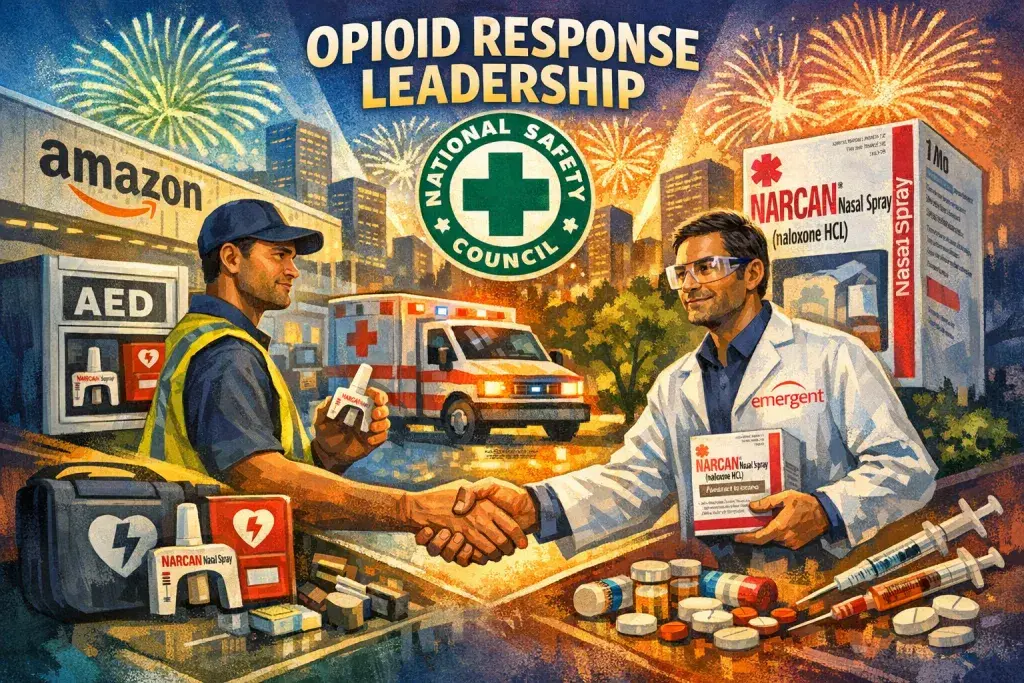
Amazon's move equips North American facilities with naloxone, the overdose-reversal drug, positioning the retailer as an early corporate responder to pleas from health officials and nonprofits. The opioid crisis has claimed over a million U.S. lives since 1999; workplaces now face overdose risks amid fentanyl's spread. Naloxone—once prescription-only, now over-the-counter via NARCAN Nasal Spray—reverses effects if administered promptly, buying time for paramedics. Emergent BioSolutions, NARCAN's maker, ramps this up through business outreach, targeting jobsites, stores, airlines, and hotels where automated external defibrillators already sit ready. The pairing makes sense: just as AEDs normalize cardiac emergency prep, naloxone could blunt opioid deaths on the clock. What's striking—both act where first responders lag, turning employees into immediate safeguards.
Fleet Overhaul: New York City's Crash Mitigation Blueprint
The New York City Department of Citywide Administrative Services oversees the nation's largest municipal fleet—28,500 vehicles—plus 10,000 contracted school buses. Since 2017, its Safe Fleet Transition Plan mandates technologies like intelligent speed assistance, truck sideguards, visibility aids, and telematics to align with Vision Zero, the 2014 street-safety pledge that slashed fatalities citywide. Partnering with the U.S. DOT's Volpe Center, DCAS updated the plan in 2019 and 2024; January tallied over 100,000 upgrades installed. In practice, though, sideguards prevent under-ride crashes—where cars slip beneath rigs—and telematics flags reckless driving in real time. This isn't piecemeal; it's systemic retrofit, proving scale matters when fleets dwarf most private operators. Downstream, it models how cities tame urban crash rates, where vehicles kill pedestrians at triple the national average.
Remote Eyes: Preventing Turbine Fires Before They Ignite
Puget Sound Energy fits SYTIS TC-90 cameras inside wind turbine nacelles—those high-altitude electrical housings prone to arc blasts and fires. Technicians skip hazardous climbs; remote views spot heat anomalies early, nipping faults in converters too. Success bred expansion: field deployments now trace failures without exposure. Wind farms, expanding fast amid clean-energy mandates, pack dense electrical gear 300 feet up; one overlooked spark cascades into multimillion-dollar blazes. PSE's fix attenuates that—diagnostics from afar cut response times and catastrophe odds. To put it plainly, it's table stakes for scaling renewables safely; ignoring it risks the long tail of downtime and injuries.
Broader Echoes from a Safety Milestone
NSC CEO Lorraine M. Martin framed the winners' work as "far-reaching—protecting workplaces and communities today and shaping a safer tomorrow." The event's haul funds health programs, but the real yield lies in replication: naloxone kits where AEDs thrive, fleet tech beyond Gotham, camera feeds in any remote industrial perch. Opioids kill 100,000 yearly; roads claim 40,000; energy mishaps injure thousands. These efforts don't erase those tolls—they carve measurable dents, proving advocacy plus tech bends curves. Fair enough; no silver bullets. Yet in an era of fentanyl floods and electrification rushes, such leadership sets the pace others must match.